Installing drywall anchors is pretty straightforward, right? First, choose a drywall anchor that’s rated to handle the weight of whatever it is you’re planning to hang from it. Next, use a drill bit that matches the diameter of the anchor to drill a hole in the drywall. Tap the anchor into the hole until it’s flush to the wall then drive the screw into the anchor with a screwdriver or drill/driver. It’s the final step where most people get it wrong.
Related: The 15-Minute Hardwood Repair Pros Don't want You to Know
What Most People Get Wrong
As Toronto-based woodworker and influencer Kenny Chan demonstrates in his TikTok video on the topic, most people drive the screw into the anchor and stop when the head is protruding about an 1/8 inch to 1/4 inch or so from the wall, so that it can function as a hanger.
This problem with the practice has to do with the way a drywall anchor works. The tips of drywall anchors are designed to expand behind the wall, creating a brace that can support from 10 to as much as 100 lbs. depending on the size and type of the anchor and the thickness of the drywall.
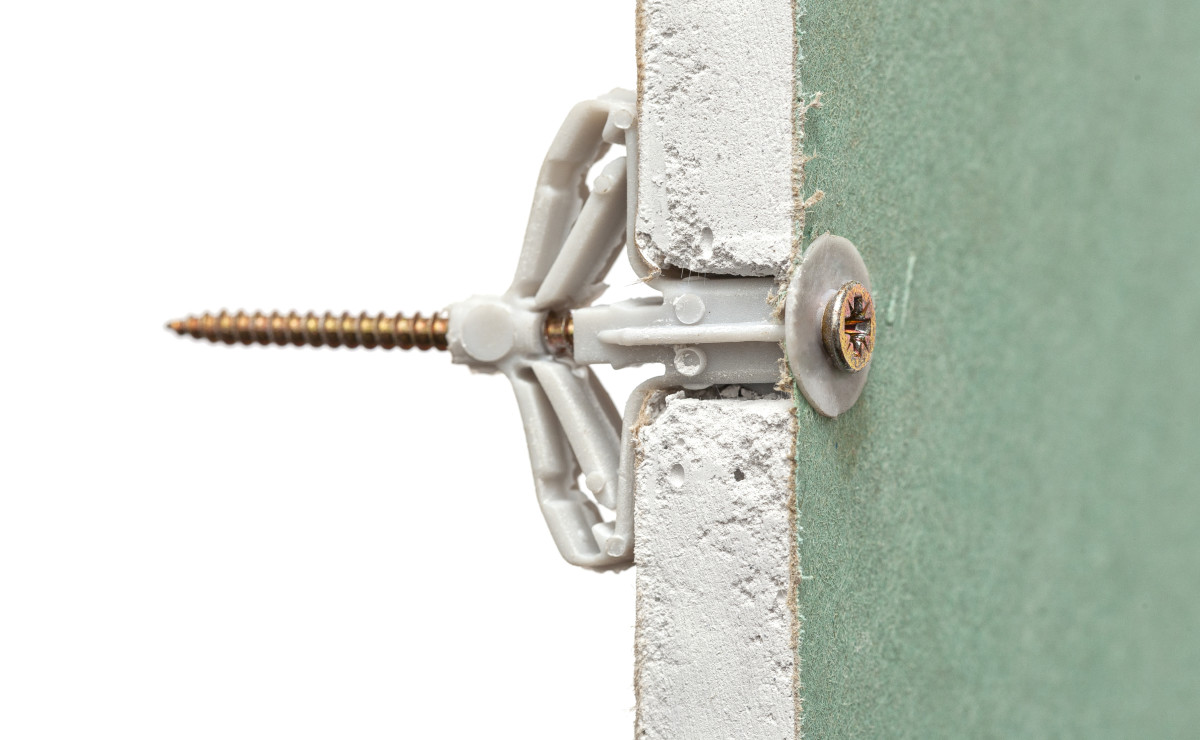
Getty Images
But in order for the drywall anchor to fully anchor itself, the screw must activate it. As the screw threads into the anchor, it forces the anchor’s tip to expand, creating the brace. This only happens if you drive the screw fully into the anchor so that it’s flush to the wall. If you stop a 1/4-inch short, the anchor won’t fully activate.
Without that brace fully extended, the anchor won’t adequately support the weight of the object you’re hanging. It also won’t be secure in the wall and may spin or tear the drywall. If you’re using the anchor to support a floating shelf or towel rack, the anchor can actually work itself loose over time, eventually failing.
Drive It Home
When you’re installing the screw into the drywall anchor, drive it fully in so the head is flush to the wall to fully activate the anchor. Then back the screw out so you can use it as a hanger.
Note: Just as it's important to drive the screw flush to the wall, it’s also important not to over tighten the screw as doing so can tear the anchor apart.
from Men's Journal https://ift.tt/1fGXM2U

No comments:
Post a Comment