Many tools are made of steel, aluminum, iron, or other metals, but if they are improperly stored, allowing them to be exposed to high levels of humidity or moisture, these durable tools can develop rust. However, light and even moderate rust is usually reversible using these beginner-friendly methods from CRC Industries and Rich Lauer, contractor and owner of Premier Building Solutions.
Simple methods involve soaking the tools in vinegar, removing the rust with a wire brush, applying baking soda paste to the affected areas, using commercial rust cleaners, or, if you have severely rusted tools, using electrolysis to get rid of rust. Keep reading to find out how to clean rusty tools and prevent rust from coming back.
Why Tools Rust in the First Place
How Rust Forms on Metal Tools
Understanding how rust forms on your metal tools is essential for protecting them from rust in the future. “Rust forms when iron or steel is exposed to moisture. Outdoor tools rust often due to humidity, condensation, dirt, and sweat. This is common with tools stored in sheds or garages with temperature swings that are unventilated,” says Lauer.
Water or humidity comes into contact with the surface of the tool and acts as an electrolyte, causing the iron atoms in the metal to lose electrons. These electrons interact with oxygen molecules in the air. The interaction creates iron ions, which bond with the oxygen and water to form hydrated iron (III) oxide, the scientific term for rust.
Garages, sheds, and basements accelerate rust because they trap the two primary catalysts for oxidation: high moisture and stagnant air. These spaces lack the stable climate control of main living areas, creating a breeding ground for metal corrosion.
Related: How to Remove Rust From Cast Iron and Re-Season Your Skillets and Pans
Common Causes of Rusty Tools
In order to prevent rust from forming on your tools, you need to take steps to safeguard your tools against the common causes of rust. Lauer notes that “moisture on unprotected metal can cause oxidation, which can degrade the surface. Dirt, sawdust, fertilizer, and salt make it worse by trapping moisture.” Other causes of rusty tools include:
- Leaving tools wet
- Storing tools outdoors
- Humid environments
- Dirt and sap buildup
- Poor maintenance
Can Rusted Tools Be Saved?
Most rusted tools can absolutely be saved. Restoring your tools saves money, preserves high-quality older steel, and extends their lifespan by years. “Rusted tools can be saved if the corrosion isn’t too deep. Surface rust can be managed with cleaning and conditioning. Tools that cannot be restored are those with severe pitting, a weakened structure, or rusted moving parts on the tool,” explains Lauer.
Surface rust is light, flaky brown or orange dust. This is purely cosmetic and very easy to fix, but deep corrosion where the rust has eaten small craters into the steel should be assessed on a case-by-case basis. The tool is still usable, but the surface will remain textured and slightly weakened.
Pliers or clamps with seized joints that will not open can usually be freed with deep penetrating oils or a vinegar bath. However, if the metal is paper-thin, crumbling, or has visible holes, the structural integrity is permanently compromised. For safety reasons, discard it.
Related: Your Grill Is Disgusting—Here’s How to Deep Clean It Before Summer
Tools and Supplies You’ll Need
Basic Supplies
Before you begin, you will need to pick up the following supplies to remove rust from your tools. Keep in mind that you may not need all of these supplies, so check below to decide on which method you would like to use first. For instance, if you opt for the vinegar method, then you do not need baking soda.
- White vinegar
- Baking soda
- Wire brush
- Steel wool
- Dish soap
- Rags or microfiber cloths
- Bucket/container
Optional Rust Removal Products
If you prefer a faster method than vinegar or baking soda, commercial rust removers, like Evapo-Rust, are popular for heavy rust because they require minimal scrubbing and work quickly. Consider picking up one or more of the optional rust removal and tool treatment products below.
- Commercial rust removers
- Penetrating oil
- WD-40
- Evapo-Rust
- Rust-prevention spray
Related: The Biggest Knife Storage Mistake Almost Everyone Makes
How to Clean Rusty Tools Step-by-Step
Step 1: Clean Dirt and Grease Off the Tool
Before treating the rust, wash the tool in a bucket of warm, soapy water using a stiff brush or abrasive pad. This removes dirt, grease, and grime that can prevent rust-removers from working effectively. Rinse and dry the tool completely.
Step 2: Choose Your Rust Removal Method
Next, you will want to decide on what method you intend to use to remove the rust. Basic options with household goods include soaking the tool in vinegar or applying baking soda paste to the rusted area of the tool, then scrubbing the rust with steel wool, a wire brush, or a scouring pad.
You could also choose to use a commercial rust remover if you are looking for a faster treatment method or opt to use electrolysis for handling more delicate tools and accessories, since electrolysis will remove rust without as much scrubbing required, reducing the risk of scratching or otherwise damaging the tools.
Method 1: Remove Rust With Vinegar
How Vinegar Removes Rust
Vinegar removes rust through a chemical reaction driven by acetic acid. When rusty metal (iron oxide) is submerged in vinegar, the acid reacts with the rust, converting it into a water-soluble compound called ferric acetate. The rust simply dissolves or flakes off, leaving clean, bare metal.
How to Soak Rusty Tools in Vinegar
According to CRC Industries' rust removal guide, it’s important to submerge the tools for 12 to 24 hours, depending on the severity of the rust. Lauer says to “soak the rusted part in white vinegar for several hours to break down oxidation, then scrub with steel wool, a wire brush, or a Scotch-Brite pad. Use a brass brush or pick for detailed areas. After scrubbing, rinse and dry the tool right away. The leftover moisture can restart rust.”
Which Tools It's Best For
The vinegar soak rust removal method is a highly effective, low-labor DIY technique for dissolving rust from iron and steel. It is best for removing light to moderate rust from small to medium hand tools, like wrenches, pliers, sockets, and hammers, as well as garden tools, like trowels, hori hori knives, and hand rakes.
Related: How a Knife’s Steel Type Affects Sharpening
Method 2: Use Baking Soda for Light Rust
How to Make a Baking Soda Paste
Making baking soda paste is easy. You only need the baking soda and water. Simply combine equal parts baking soda and water in a bowl, adding more baking soda until it forms a thick, toothpaste-like texture. For extra rust-fighting power, substitute the water with lemon juice or white vinegar.
How to Scrub Away Rust
Spread a generous layer of the paste directly over the rusted areas using your fingers, a sponge, or a toothbrush. CRC Industries recommends letting the paste sit for about one hour to give it time to penetrate through the corrosion. For heavier rust, you can let it sit overnight.
After it has had time to work, use steel wool, a scrubbing pad, or a wire brush to scrub the paste in a circular motion. The mild abrasiveness of the baking soda will lift the rust away. Wipe the item clean with a damp cloth or rinse it with water. Dry the metal completely with a towel or hairdryer, as leftover moisture will immediately cause new rust to form.
Which Tools It's Best For
A baking soda paste is best for light surface rust, small rust spots, and delicate items that harsh chemicals or wire brushes might scratch or destroy. It works as a gentle, abrasive scrub and is completely safe, non-toxic, and cheap. It's excellent for removing rust from kitchen tools, like old baking sheets, cast iron, or stainless steel without using toxic chemicals.
Related: The Best Tool Organization Ideas for Garages, Workshops, and Small Spaces
Method 3: Use a Commercial Rust Remover
When Rust Removers Work Best
Commercial rust removers are superior to vinegar and baking soda when dealing with severe corrosion, large surfaces, or precision parts. Commercial products break down heavy, stubborn rust in minutes to a few hours, whereas vinegar requires overnight soaking. Additionally, commercial chelating agents actively dissolve rust without scrubbing, making these products ideal for hard-to-scrub surfaces and delicate or vintage tools.
How to Use Rust Remover Safely
To use commercial rust removers safely, always wear chemical-resistant gloves, protective eyewear, and work in a well-ventilated area. Avoid mixing different chemicals, protect surrounding surfaces, and always neutralize or rinse the metal thoroughly after treatment to prevent further corrosion. Follow the manufacturer’s instructions properly, without cutting corners, and keep in mind that soak times may vary from product to product, so don’t make any careless assumptions based on previously used products.
Best Commercial Rust Removers
Some of the best commercial rust removers include Evapo-Rust, Naval Jelly, and Rust Dissolver gels. In particular, Evapo-Rust is a popular go-to product for rust removal because it efficiently removes rust without heavy sanding or scrubbing, allowing it to be used on a wide variety of tools and other metal products.
Related: Dull Lawn Mower Blades Are Secretly Destroying Your Grass
Method 4: Remove Rust With Electrolysis
What Is Electrolysis?
Electrolysis is a highly effective, non-abrasive method used to remove rust from iron and steel. It uses a direct electric current to convert rust into a soft, black sludge that easily scrubs off, leaving the original metal completely intact. However, since this process splits water into hydrogen and oxygen gases, which are highly combustible, you should always perform this in a well-ventilated area or outdoors, and never smoke or use open flames near the tank.
Tools Needed for Electrolysis
According to CRC Industries, electrolysis rust removal requires a simple, non-conductive tank, a sacrificial piece of steel, washing soda, and a 12V DC power source. A standard 5-gallon plastic bucket works perfectly for most hand tools and a piece of plain, scrap steel or iron is a good choice for sacrificial steel. Avoid using stainless steel, as it can produce hazardous hexavalent chromium when subjected to electricity.
For your electrolyte solution, the most effective and inexpensive option is washing soda (sodium carbonate), which is readily available in the laundry aisle of most supermarkets as a water softener. A manual or standard 12-volt automotive battery charger is a suitable choice for your power source, though you will need one that you can set to roughly 2 to 10 amps.
Also, you will need insulated copper wire or jumper cables with alligator clips to connect the power supply to your anode and rusty tool, as well as scrap wood or a metal rod to lay across the top of your container, allowing you to suspend your rusty part in the solution without it touching the bottom or sides.
When to Use It
Use electrolysis when you need to be as delicate as possible with the restoration process, such as when handling heavily rusted antique tools or during a restoration project. “For moderate rust, using vinegar is usually faster. Electrolysis works well for heavily rusted tools and removes rust without harming the metal,” Lauer says. Follow these steps to remove rust with electrolysis:
- Prepare the Tank: Fill your container with water and dissolve the washing soda.
- Place the Anodes: Submerge your sacrificial steel pieces around the inside edges of the bucket and wire them all together.
- Submerge the Object: Suspend your rusty object in the center of the bucket using a copper wire or metal clamp. Ensure the object does not touch any of the scrap metal pieces.
- Connect the Power: Attach the negative (Black) clip directly to the rusty object and attach the positive (Red) clip to the sacrificial scrap metal.
- Run the Current: Turn on the battery charger (usually set to 2 to 10 amps). Within a few minutes, you should see bubbles rising from the metal, indicating the process is working.
- Wait: Depending on the severity of the rust, leave the item in the bath for 3 to 24 hours.
- Clean: Remove the item and scrub off the black residue with a stiff brush and water.
Related: How to Clean Granite Countertops Without Damaging Them, According to an Expert
How to Clean Rust Off Specific Types of Tools
How to Clean Rusty Garden Tools
Restore rusty garden tools by soaking them in an overnight white vinegar bath, which dissolves the rust. Scrub away loosened residue with steel wool or a wire brush, then rinse, dry thoroughly, and apply a lubricating oil to prevent future corrosion.
Depending on your tool, you may need to tweak your approach to protect handles, gears, or painted surfaces. For instance, you should never submerge wooden handles in a vinegar bath. Instead, apply the vinegar strictly to the metal heads using a rag, or wrap the metal parts in vinegar-soaked paper towels. Sand the wooden handles with fine-grit sandpaper to remove splinters, and rub them with boiled linseed oil to restore the wood.
How to Clean Rusty Hand Tools
Hand tools are usually forged from hardened steel, allowing for more aggressive cleaning methods. Lauer explains that “cleaning methods depend on the tool’s coating and tolerances. Hand tools can handle aggressive cleaning; precision tools need gentler cleaning to avoid damage.”
For a non-toxic approach, soak the tools in Evapo-Rust for a few hours. For heavy-duty restoration, pure phosphoric acid will dissolve rust and convert it back to metal in about 30 minutes. If you own a bench grinder with a wire wheel attachment, you can mechanically buff the rust off quickly. Always wear safety glasses when using power buffers.
How to Clean Rusty Power Tools Safely
Never submerge power tools in liquids or use acidic baths, as this will destroy the motor and electrical components. Remove batteries, unplug the tool, and take apart the affected components (like a rusty table saw surface or drill chuck) if possible. Use fine-grit sandpaper (220 to 400 grit) or an abrasive nylon pad to manually sand away the rust.
For rust stains on flat surfaces, mix baking soda with a little water to make a thick paste. Rub it onto the rust, let it sit for an hour, scrub it, and wipe it completely dry. Spray down metal surfaces with a dry lubricant or a rust inhibitor to prevent future corrosion.
Related: The Easy Trick to Make Serrated Knives Cut Like New Again
How to Restore Rusty Vintage Tools
Vintage tools often have historical or collector value, meaning you want to remove the rust without stripping the natural patina or damaging any old wooden handles. Electrolysis is generally the best method for handling these tools. Submerge the metal in a bucket of water mixed with a washing soda electrolyte. Attach a battery charger (negative to the tool, positive to a piece of scrap steel) to safely lift rust away without scrubbing.
Another option is to use oxalic acid. This is a gentle, wood-safe acid that will strip rust off metal while restoring the natural look of vintage wood handles. For a slightly more aggressive cleaning, use the finest grade steel wool (0000 steel wool) combined with mineral oil to gently rub away surface rust while preserving the underlying metal's age and character.
How to Prevent Rust From Coming Back
Dry Tools Completely After Cleaning
Air-drying can leave micro-beads of moisture in crevices, and toweling can leave lint that attracts humidity. “Remove all mud, fertilizer, salt, or sawdust. Wipe down tools before storing them and don’t store damp rags or wet materials with tools,” notes Lauer.
After wiping with a clean shop rag, use a heat gun or hair dryer on high, or place tools in a low-temp oven (around 200 degrees Fahrenheit) for 10 to 15 minutes. The heat forces water out of pores and screw threads. Alternatively you can submerge the tool or spray it heavily with a moisture-displacing protectant. The solvent chases the water off the metal, allowing you to easily wipe away the displaced water.
Apply Oil or Protective Coating
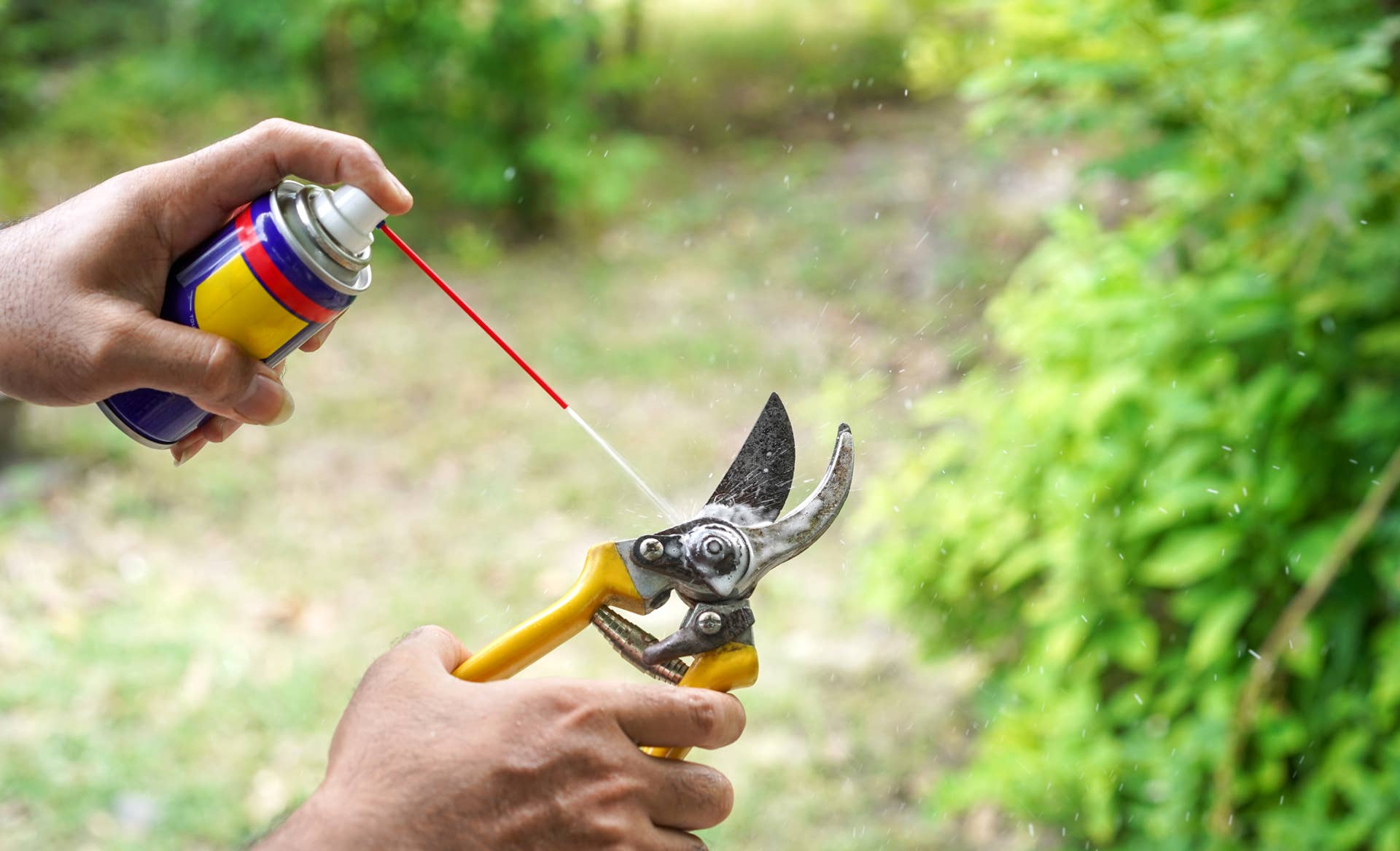
To prevent rust from returning, you must completely neutralize existing rust and seal the metal to block moisture and oxygen. Use protective coatings or oil sprays for areas that need flexible, renewable maintenance. Mineral oils, WD-40, and corrosion inhibitors work well to safeguard the metal against moisture, reducing the risk of rust returning. But you still need to make sure to clean and dry your tools after every use, especially if they are being used in high-moisture environments, like digging through soil or cutting vegetation.
Store Tools Properly
Proper protection when the tools are not in use is essential to prevent rust. Avoid keeping tools in uninsulated garages or sheds with high humidity, as drastic temperature changes cause moisture to condense on metal surfaces. Lauer says to “keep tools off concrete floors to avoid condensation, and use dehumidifiers in tool sheds or storage rooms.”
Ideally, you should store your tools in a dry environment and make use of desiccant, like silica gel packets which can be placed directly into your tools boxes and drawers, to reduce moisture in the immediate area.
Related: How to Sharpen Kitchen Knives at Home for Safe, Efficient Cutting
Common Mistakes to Avoid
Using Harsh Abrasives on Delicate Tools
When restoring delicate tools (such as antiques, fine measuring instruments, or intricate gears), Lauer says, “don’t use harsh abrasives or grinding wheels, and always dry tools completely after cleaning to prevent rust.” These aggressive methods will permanently strip metal, obliterate fine manufacturer stamps, and destroy critical tolerances. Instead of grinding or harsh sanding, opt for controlled, chemical-free, or chemical-neutral methods.
Leaving Tools Wet After Cleaning
Leaving tools wet after cleaning or soaking is one of the quickest ways to induce flash rust on freshly exposed metal. To ensure your restored tools stay rust-free, wipe the tool down thoroughly with a clean, dry microfiber cloth or rag. Ensure you get into tight crevices, hinges, and gears. For extra insurance, coat the metal in a water-displacing lubricant. This actively forces trapped moisture out of the pores and away from the metal.
Not Applying Protection After Rust Removal
Bare, newly restored metal is incredibly vulnerable to moisture. Neglecting to apply a protective coating after rust removal leaves bare, microscopic pores exposed to oxygen and moisture, virtually guaranteeing immediate flash rust. Always seal restored metal with a rust inhibitor, such as WD-40, boiled linseed oil, or paste wax, to secure your tools.
Using the Wrong Brush or Sandpaper
Using the wrong brush or sandpaper to restore rusted tools can permanently damage or destroy precision surfaces. The most common mistakes include using harsh steel brushes on delicate surfaces, skipping the pre-soak phase, or using the wrong abrasive grit. Many in the restoration community say to avoid overly aggressive sanding or grinding. Lauer notes that it’s good to “lightly sand stubborn spots, especially on flat surfaces, but use gentle abrasion for woodworking or precision tools to avoid damage.”
Related: The 10-Minute Air Conditioner Fix That Could Slash Your Energy Bills This Summer
Pro Tips for Restoring Rusty Tools Faster
When you are in a hurry, there are a few things that you can do to help speed up the process, but it’s important not to get too hasty when it comes to aftercare. Lauer provides the following advice for restoring and maintaining your tools: “Separate used tools from those in long-term storage. Take care of your frequently used tools by wiping them down. With seasonal tools, you should get extra oil before storing them. Place your tools in a storage room or shed with good airflow to help prevent any moisture from being trapped. Avoid sealed containers without ventilation since they can cause condensation.” Other pro tips for restoring rusty tools faster include:
- Start with the gentlest method first.
- Use brass brushes for delicate tools.
- Warm vinegar works faster.
- Soak overnight for heavy corrosion.
- Sharpen tools after rust removal.
- Oil hinges and moving joints afterward.
Related: Don’t Let Battery Corrosion Ruin Your Devices. Here’s How to Clean It Safely at Home
FAQs
What removes rust from tools the fastest?
If speed is your only priority, then a chemical rust-dissolve soak using commercial rust cleaners is the quickest method. These cleaners are designed for this exact purpose and can often remove rust in just 10 to 30 minutes with minimal scrubbing required.
Does vinegar really remove rust?
Ordinary white vinegar is a common option for rust-removal because it is highly effective at dissolving and removing rust due to the active component, acetic acid. Just submerge your rusty tools for about four to 24 hours, depending on the severity of the rust, then use a scouring pad, steel wood, or a wire brush to scrub the rust away before wiping the tool clean and drying thoroughly.
Can baking soda remove rust?
Baking soda paste is an excellent, non-toxic household solution for removing rust. Simply apply the paste generously to the rusted area, let it sit for several hours or even overnight, then scrub the area using a scouring pad, steel wood, or a wire brush before wiping clean and drying thoroughly.
What is the best rust remover for tools?
The best rust remover for tools is CRC Evapo-Rust. It is a non-toxic, biodegradable, and pH-neutral liquid that removes rust without scrubbing or sanding. For a budget-friendly household alternative, soaking tools in plain white vinegar is highly effective.
How long should I soak rusty tools in vinegar?
The length of time you should soak rusty tools in vinegar depends on how badly rusted the tools are. Generally, light surface rust may clear up in four to six hours, but heavily crusted tools can take up to two days. However, you should never leave your tools to soak in vinegar for longer than two days, as the acid can begin to damage the metal. Ideally, 24 hours is more than enough for most rusty tools.
Can heavily rusted tools be restored?
Heavily rusted tools can usually be restored as long as the corrosion isn’t too deep. Tools that may not be able to be restored include those with severe pitting, cracking, or severely rusted moving parts.
How do you stop tools from rusting again?
You can stop tools from rusting again by first getting rid of any existing rust. After restoring the tool, block any moisture that could cause rusting by controlling the environment where the tool is stored, cleaning and drying the tool after every use, and applying a protective treatment, like anti-rust oil.
Can WD-40 remove rust?
WD-40 works by breaking down the bond between the rust and the metal, while also providing a lubricating layer that allows you to scrub the corrosion away easily, making it a common go-to product for rust removal and rust prevention.
from Men's Journal https://ift.tt/4rlaEyC

No comments:
Post a Comment