A weed whacker, also known as a string trimmer or weed eater, is an essential lawn care tool for keeping your grass neatly trimmed. Beyond the benefits of removing weeds, a string trimmer can be used to create clean edges around your lawn, cut grass around trees and fences, trim hard-to-reach areas, and achieve a professional-looking finish.
Ready to take your lawn care skills to the next level? Here’s everything you need to know about how and when to use weed whackers.
What Is Weed Whacking?
Weed whacking is a lawn maintenance practice that uses a power tool called a weed whacker, string trimmer, or weed eater to trim grass in tight spaces, such as around trees and along fences, and create nicely cut edges. It is a must-have tool for lawn care, helping you access and trim areas a lawnmower can’t reach.
Types of Weed Whackers
When you look for a weed whacker, you have three choices to choose from: gas-powered, electric corded, or battery-powered. Plus, you can choose between a straight shaft and a curved shaft. Each of these models has many benefits, but also some downsides that you should know about.
Related: The Best Way to Fertilize and Water Your Lawn for Greener Grass, According to Pros
Gas Weed Whacker
Gas-powered weed whackers are the go-to tools for landscaping tasks, especially among lawn care companies and homeowners with large properties to maintain. One of the biggest benefits is that a gas-powered string trimmer can run for a long time and you only need to stop to add more fuel.
Pros
- Unlimited run time (as long as you refill the gas)
- Top choice for landscapers
- Many models and prices to choose from
Cons
- Emits fumes and a strong gasoline smell
- Noisy
Corded Weed Whacker
Corded electric weed eaters have the lowest price among all other types: gas- and battery-powered. They are easy to get started and provide unlimited running time, literally. However, the reach is limited to the length of the extension cord.
Pros
- Best for small yards
- Easy to operate
- Eco-friendly
- Cost-efficient
- Lightweight
Cons
- Limited to the cord reach
- Not as powerful as gas or battery-powered ones
Battery-Powered Weed Whacker
Battery-powered tools, including string trimmers, have become more popular in the past several years. Most cordless weed eaters use lithium batteries and a brushless motor, which makes them efficient and able to run longer. Battery-powered options are a top choice for most homeowners for their ease of use and freedom to use anywhere without a cord.
Pros
- Easy to turn on and operate
- Best for small- to medium-sized yards
- No smells or fumes
- Minimal upkeep
- The battery may be compatible with other tools from the same brand
Cons
- Run time limited to battery charge life
- Can be pricey
Related: These Are the Lawn Fertilizers Pros Swear By for Thicker, Greener Grass
Straight Shaft vs Curved Shaft
First, let’s define a shaft. The shaft in a string trimmer is the body that connects the engine to the cutting head. That can either be straight or curved. The main differences between the two come down to reach, weight, and ease of use.
Straight shafts are the top choice for landscapers because they have a larger reach, making it easier to trim in tight spaces. They work well on large properties, but they are heavier and more difficult to control.
On the other hand, Chrissie Handley, a lawn care specialist at Online Turf, explains, “Curved shafts are the standard options for domestic gardens, they’re easy to use and have great maneuverability, meaning you can strim hard-to-reach corners of your garden.” They are a great option for working in small yards and garden beds and are best suited for homeowners.
Essential Safety Tips For Weed Whacking
Weed whackers are strong power tools that can literally send small rocks or debris flying. It is extremely important that you read the operation manual if you don’t have experience using one. Here are some tips you should follow:
- Read, read, and re-read your operation manual. Get familiar with the tool, its features, and the type of string and length you should use.
- Wear eye protection, gloves, long pants, and closed-toe shoes.
- Remove any large debris, such as rocks and sticks, and anything else that could interfere with the tool's operation.
- Grab your weed eater properly and get a good grip on the tool. Practice in a small section first and get used to the tool.
How to Weed Whack
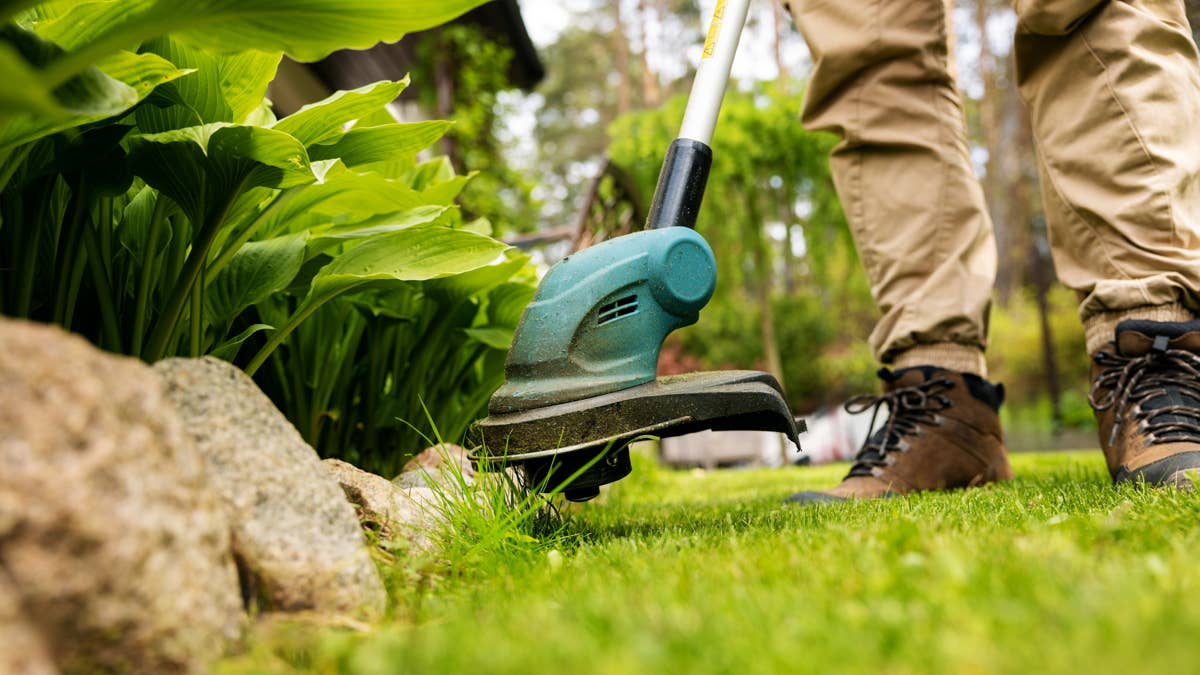
Weed whacking takes a little bit of time to get used to, especially when edging the lawn. Be patient, go steady, and you’ll master the ins and outs of weed whacking. Now, here’s how to weed whack your property.
Step 1: Prep the Area
First things first, walk around your property where you’ll be using your weed whacker. Look for and clear any debris that could become a hazard, such as rocks, toys, and twigs. Next, wear your safety gear before getting started.
Step 2: Set and Hold the Trimmer Correctly
Make sure your weed eater is in working condition and has the right string length. Most string trimmers have a self-cutting knife that cuts the string. The knife is about five to six inches from the feeder. A string trimmer requires you to use both of your hands to operate it. Hold each handgrip tightly and keep your balance throughout the cutting process.
Step 3: Use the Right Angle
There are two different ways you can use your weed eater: flat or tilted. When trimming around trees, bed flowers, or under a fence, you should position the weed whacker so it’s flat. You should move in the opposite direction of the trimmer head's spin. Swing left to right if your weed eater rotates clockwise and right to left if counterclockwise.
If you’re edging your lawn, you want to tilt the string trimmer. The tip of the string should be around three inches above the soil.
Step 4: Control Your Speed
Go slow and steady as you move forward and side to side. When working near fences and trees, you’ll want to keep some distance to avoid hitting them.
Step 5: Use the Tip of the Line
Even though the string line is about five to six inches long on both sides, the magic of the cutting happens at the very tip of the string. All the cutting power is there. So you’ll want to be cutting with the tip of the line all the time. This helps prevent unnecessary stress on the string and tangles.
Step 6: Clean up
Once you are done, clean up around your pathways and sidewalks. There will be a lot of soil and grass clippings when you’re done. Use a leaf blower to clear everything efficiently.
Related: The Biggest Mistakes People Make When Planting Grass Seed (and How to Avoid Them)
Common Weed Whacking Mistakes
Once you get the hang of weed whacking, it is kind of fun, and you’ll get good at it. However, keep in mind these commonly made mistakes that are avoidable.
- Using the wrong string thickness. Always buy a string that is compatible with your string trimmer. If you’re not sure, the operation manual should clarify what you need.
- Cutting too close to hard surfaces. Although knocking against wood fences, trees, and flower beds won’t damage the trimmer, it will deplete your string.
- Using too much string. Weed whackers have self-cutting knives. Leave the string a little longer, but don’t overload it.
- Failing to maintain the tool. If you have a battery-powered or corded weed eater, there’s not much maintenance to do, but gas-powered weed whackers require air filter and spark plug replacements.
When to Use a Weed Whacker (and When Not To)
Weed whackers are very versatile because you can use them almost anywhere in your yard, but there are places you shouldn't. Here are some dos and don’ts:
- DO use your string trimmer to edge your lawn, in slopes, and tight areas.
- DON’T use a weed whacker to remove weeds from your garden beds, even if you think you can maintain control. You'll likely end up whacking your prized flowers or vegetable plants. Just pull the weeds out or use a manual tool.
- DO trim your grass when it is dry. “Only use a [weed whacker] when the lawn is dry, similar to mowing, trying to mow/trim a wet lawn can tear the grass blades, giving you uneven results and potentially damaging them, making them susceptible to disease,” Handley notes.
- DON’T try trimming if the lawn is wet. The moisture will make the string and tool wet, and the grass clippings will stick to your tool, making it messy.
Related: Dull Lawn Mower Blades Are Secretly Destroying Your Grass
Maintenance Tips for Better Performance
Make sure to keep your weed whacker working at its highest level with proper maintenance.
- Debris and grass clippings can stick to the tool. Clean your tool after each use.
- Refill the fuel before each use.
- Charge your battery after each use, once it has cooled off.
- Replace the string with the right string thickness.
- Inspect the guard and head before using the tool.
FAQ
What is weed whacking?
Weed whacking is a lawn care practice that uses a weed eater to edge lawns, trim near and beneath fences, and trim grass and weeds around trees.
How do you use a weed whacker properly?
Firmly hold the weed whacker with both hands, start trimming slowly, and keep a consistent pace. You can use your weed eater in a flat or tilted position. The flat position is used for trimming around trees and fences, whereas the tilted positions are used to edge the lawn.
Should you weed whack before or after mowing?
The general practice is to weed-whack after mowing your grass. You have a better view of where you need to trim and edge your grass. However, weed-whacking before mowing the grass is also common practice. Do what works best for you.
Why is my weed whacker not cutting well?
Your weed whacker may not be cutting well because your string is worn down, the engine isn’t working properly, or the battery doesn’t have enough charge.
Can you weed whack wet grass?
You can, but it is not recommended. When you weed-whack wet grass, it is messy, and the grass clippings and debris stick to your tool. Also, it can make a mess in your pathway or near vinyl fences and could be harder to clean.
from Men's Journal https://ift.tt/V8v2sRG

No comments:
Post a Comment