Canvas tents and wood stoves are the (ahem) hottest trend making a resurgence in the outdoor community. And especially if you’re a paddler, you need to know why. ‘Hot tents,’ as they are commonly referred, have for long been a necessary overland staple of northern regions, be it for prospecting or moose hunting, over-wintering, or dog-sled travel. These are adaptations of indigenous tipis, with heavy canvas and lightweight wood stoves that ward off the coldest nights. For paddlers, the modernization of an old-time tradition means you can now easily fit updated, streamlined models in your hull and tump them over portages, the ultimate takeaway being an extended paddling season on both ends of winter’s chilly fringe. Initial research where to start with this category of tents can overwhelm. Here’s what you need to know before you start dreaming of those cozy, stove-crackling nights on far away lakes.
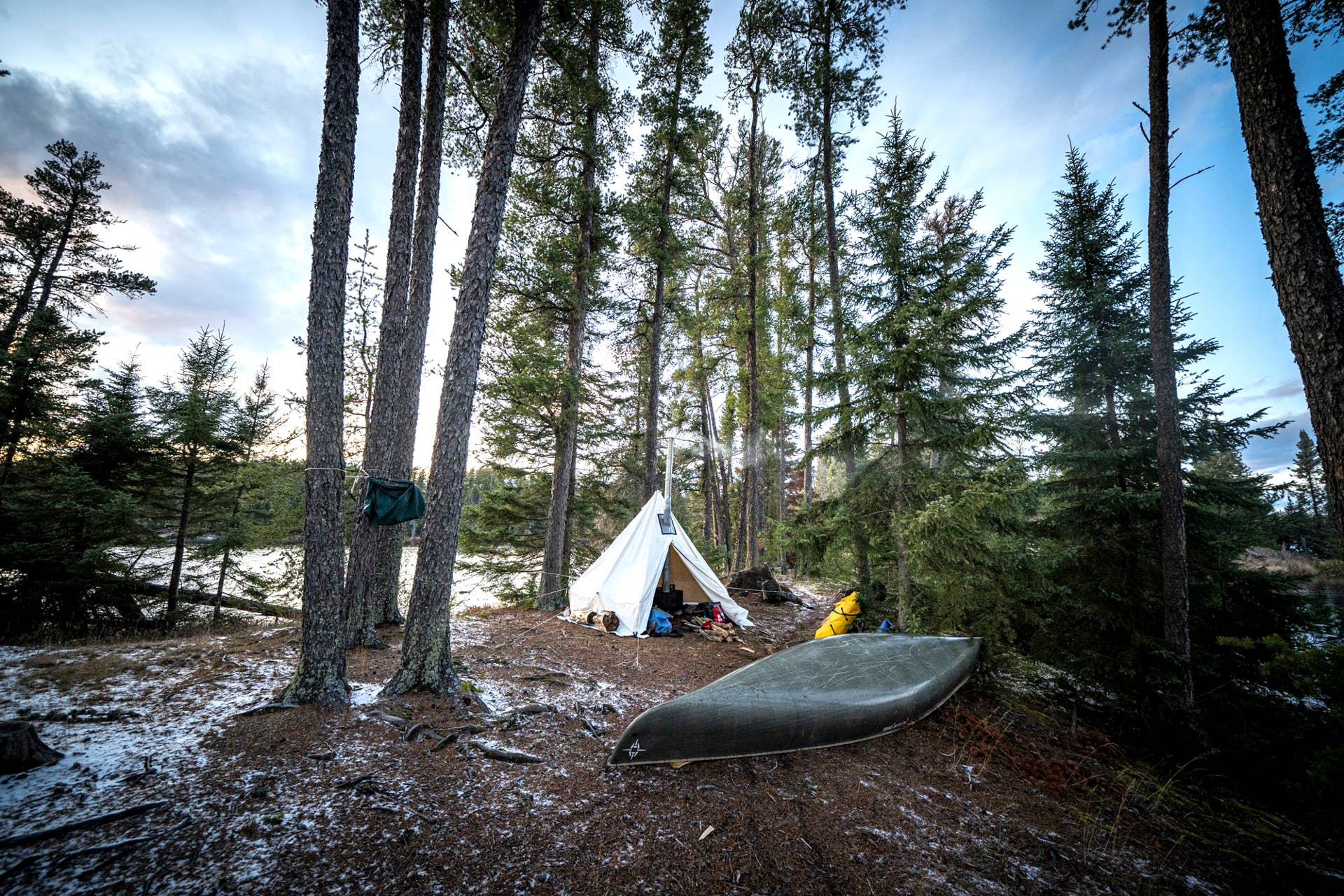
To start, there are two designs most commonly used: one a more traditional, five-sided, circular tipi; the other, an aluminum-poled, A-frame-style tent. The former, such as an Esker Arctic Fox 9×9, is easiest set up in and among trees, considering the numerous lashing points for the walls, while a center pole erects the tent. Either a green tree from the bush or a store-bought painter’s pole works, where the stove’s exhaust pipe rises straight up. The latter, such as a Snowtrekker Short Wall, is a more common style among winter campers with a freestanding frame that’s easier to set up in open areas. These tents’ stove pipes utilize a bent elbow, rising from the side of the tent wall (which requires a constructed tripod for support). In the case of either tent, the canvas for two-person models is generally sub-20 pounds. The preferred stove by most campers are made by Kni-Co Manufacturing and feature stove pipes that nest inside the firebox. Together the kit weighs around 40 pounds.
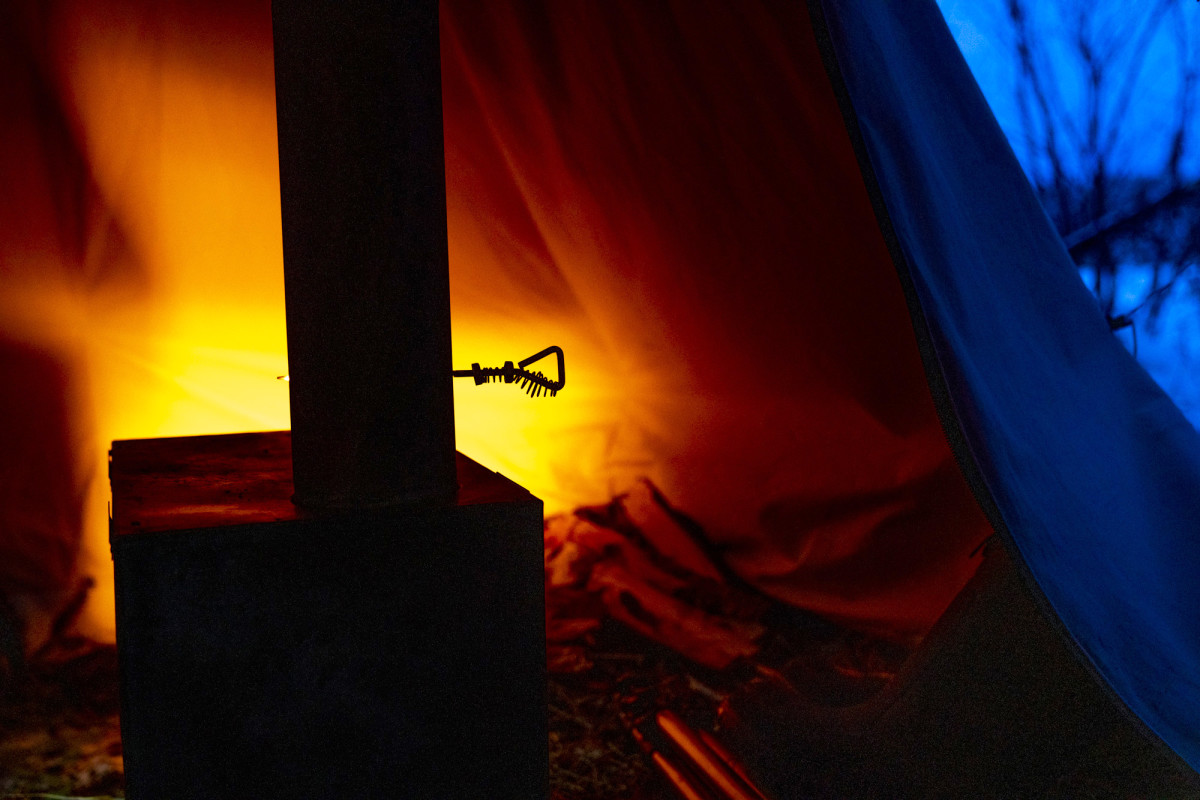
Whichever tent you decide to go with, either style has finicky tricks to setup and takedown; neither should be considered more or less capable. What is most exceptional about hot tents is their ability to create comfort in otherwise uncomfortable climates. Fall and spring time can be dangerous for people on the land traveling by water. Skies bring rain, night brings frost, and there’s always the sneaking chance of a blizzard at bay, but once you’ve experienced the warmth of wood stove inside canvas, any outdoor traveler is liable to fall in love with the solitude of fringe season travel.
Interested? A few brands to consider are Snowtrekker Tents, Esker Tents, Atuk Tents, and KniCo Stoves.

See more of David Jackson‘s prior work for Canoe & Kayak:
from Men's Journal https://ift.tt/2RQ24xe

No comments:
Post a Comment