Coffee banana cake is a sweet treat that makes for the ideal indulgence for coffee-lovers.
from NDTV Food-Latest https://ift.tt/3kpRBIw
Thursday, 1 September 2022

This Butter Chicken Sandwich Spells Indulgence In Every Bite
Butter Chicken Sandwich is a delightful dish that gives a unique spin to the usual sandwich recipe.
from NDTV Food-Latest https://ift.tt/Tofi5tJ
from NDTV Food-Latest https://ift.tt/Tofi5tJ
The Best Bodyweight Exercises for Your Back
When it comes to a great back workout, you need to ensure you include exercises that attack all the muscles: namely the deltoids, traps, lats, and rhomboids. You may think you need a cable machine along with barbells and dumbbells to do all that. But you don’t. There are tons of great bodyweight back exercises that you can do right in your own living room, with minimal equipment.
The 10 exercises below, chosen by Marc Megna of Anatomy at 1220 in Miami Beach, FL, will get you started. To do them, all you’ll need is a suspension trainer and a pullup bar (many of the moves, though, require no equipment at all).
You can do all of these exercises together as part of one cohesive best-ever bodyweight back workout, or you can pick a few of your favorites and mix them into your existing routine. Look out for Megna’s pro tips sprinkled throughout the descriptions to maximize every movement.

The 10 Best Bodyweight Back Exercises
from Men's Journal https://ift.tt/5bjTEgu
How Putin’s Mercenary Army Does the Dirtiest Work in Ukraine
After a week of heavy fighting against Ukrainian forces in and around Bucha, the Russian military captured the strategic town on the outskirts of Ukrainian capital Kyiv on March 4, 2022. The next day, another cadre of uniformed invaders arrived, older than the typical teenage Russian conscripts, and the noncombat killings began in earnest. It was obvious to besieged locals that these were not regular soldiers. They appeared to act autonomously, and more viciously.
At first, the bloodshed was indiscriminate. A middle-aged man riding his bicycle was shot in the back for sport, a woman returning from the grocery was cut down by a burst of automatic fire. Unarmed residents were robbed at checkpoints and then murdered. Gunfire was heard at all hours, as were the screams. Bodies were left where they fell as warnings. Soon, the carnage grew even more sadistic, and systematic. Survivors recall how these “soldiers” raided apartment blocks to round up males under 50 years of age, and then bound and executed them. Women were raped and tortured as the armed men laughed and drank. Some corpses were set on fire. Bucha residents, at great peril to themselves, dug hasty graves for other victims, their friends and neighbors, when the Russians weren’t watching.
When Ukrainian forces liberated Bucha on April 1, they entered a ghost town littered with rubble and smoldering vehicles. The dead were everywhere. Bodies were strewn for half a mile along Yablosnka Street in the southern part of town. By conservative estimates, more than 400 men, women and children had been murdered.
That massacre is yet another landmark of horror perpetrated by the notorious Wagner Group, a mercenary organization serving Moscow’s global sphere of influence—from the steppes of Ukraine to the deserts of Syria to the killing fields of Africa. Mysterious and ruthless, the Wagner Group has become a much-feared arm of the Russian regime. And those with knowledge of Kremlin machinations know they function as Putin’s private army.
Russian oligarch Yevgeny Viktorovich Prigozhin, 61, is widely believed to be the owner of the business enterprise that is the Wagner Group. Born in Leningrad (now St. Petersburg), the eruptive Prigozhin grew up a streetwise student of the Soviet Union’s rampant corruption. He spent nine years in prison for theft and robbery before being released into the tumultuous pivot of Russian history when the Iron Curtain crumbled from communism to nepotistic capitalism. The Soviet penal system provided a master’s degree for opportunists who were savvy and ruthless enough to stake their claim amid the chaos.
Starting with little, Prigozhin amassed a fortune. He grew a humble hot dog business into a supermarket franchise, and used the proceeds to buy casinos. His St. Petersburg restaurant, The New Island, was a favorite of the city’s rich and notorious—including many former KGB officers. One of his VIPs was rising political star Vladimir Putin. Prigozhin became known as “Putin’s chef,” and with his shaved head and $5,000 suits, looked like a Hollywood stereotype of a Russian henchman.
When Putin assumed power in 2000, the country’s spoils were divvied among such men, who adhered to a simple rule: As long as Putin is in power, this new breed of oligarchs are allowed to rake in untold fortunes, but their survival hangs by a thin wire of absolute loyalty—and financial servitude—to the
Russian president.
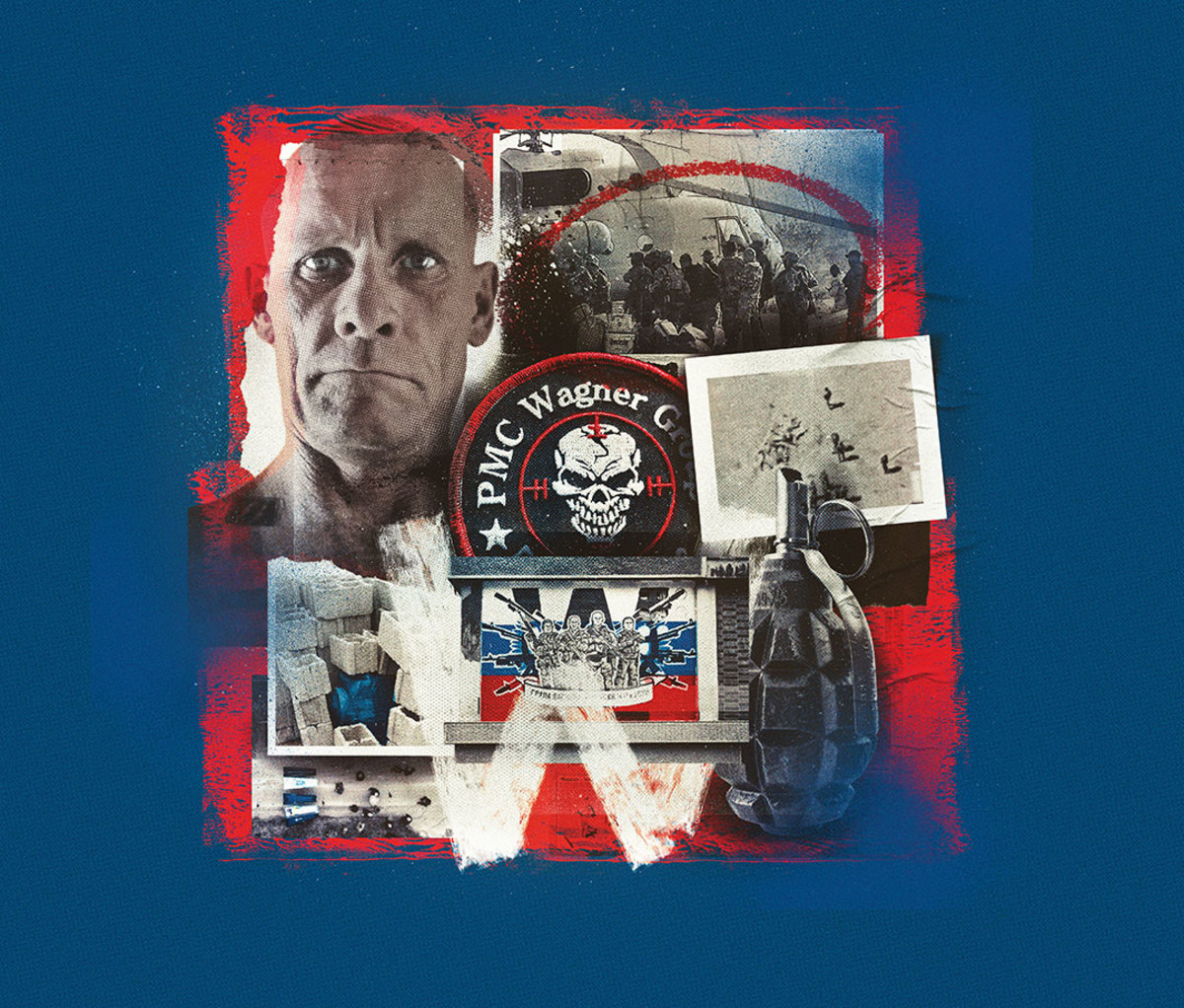
Prigozhin was handed lucrative catering contracts for the nation’s schools and military. Those contracts made him a billionaire, and he used the profits to launch even more businesses, including firms specializing in information, such as Internet Research Agency, a nefarious troll farm of some of the most capable Russian hackers. (Well before punishments were leveled at Russia for invading Ukraine, he was already under numerous sanctions by the U.S. Treasury Department for cyber interference in the 2016 U.S. elections.)
In 2014, two years into Putin’s third term as Russian president, Prigozhin invested in a shadowy mercenary firm founded by Dmitry Utkin, a neo-Nazi and former GRU (Russian military intelligence) officer who idolizes Adolph Hitler. Utkin is a veteran of two bloody wars against separatists in Chechnya—including house-to-house battles in Grozny—and commanded a Spetsnaz commando formation. He left in 2013 as a lieutenant colonel, but did not spend his retirement fishing. He went to work as an enforcer-for-hire for Slavonic Corps, a Russian private security company contracted by Syrian president Bashar al-Assad’s regime to recapture oil fields seized by ISIS and punish enemies in that country’s ugly civil war. Utkin’s radio call sign was “Wagner,” a reference to Hitler’s favorite composer. (Ironic, given Putin’s flimsy “denazification” rationale for invading Ukraine.)
Prigozhin’s deep pockets lent stature to Utkin’s private-army enterprise, and, with Putin’s approval, it became Private Military Company Wagner.
Though Slavonic Corps was registered in Hong Kong, there are no official corporate records for the Wagner Group. Foreign Policy wrote, “[Wagner] has become a shorthand, bound up in mythology, [a] network of companies and groups of mercenaries that Western governments regard to be closely enmeshed with the Russian state.” In fact, according to Marc Polymeropoulos, a retired clandestine officer and author of Clarity in Crisis: Leadership Lessons from the CIA, “the Wagner Group is the paramilitary arm of Russian military intelligence.” In other words, they are the contractors and subcontractors of Putin’s will.
Mercenaries actually are outlawed under Russian law, but companies specializing in trigger pullers willing to risk their lives and commit atrocities for big paydays are an open secret. They’re deemed necessary to protect criminal territories and businesses controlled by the oligarchs who serve Putin’s interests. According to the Center for Strategic and International Studies, the Wagner Group follows the trend of the “privatization of state violence” in Russia.
At first, like the Western private military companies that emerged during the wars in Afghanistan and Iraq (think: Blackwater), the Wagner Group hired elite-unit veterans with combat experience who were paid as much as $3,700 a month—CEO money in Russia—to put their skills to ruthlessness ends. Further tying the knot to the Kremlin, the Russian Ministry of Defense provided Wagner with part of a GRU and special-forces base in the town of Molkino in southern Russia. The base includes barracks, shooting ranges and other installations needed to prepare an army for war. The GRU also provided Wagner with assault rifles and rocket-propelled grenades. Those trained at the base ranged from seasoned combat veterans to wannabes who had never fired a weapon before.
According to a Wagner fighter interviewed by the BBC, there are three types of people attracted to joining the group. The first is the classic soldier of fortune, someone who craves adventure, combat pay, heavy drinking and fast women. The second is the lost soul resigned to the realization that fighting and killing is the only conceivable way he can earn a living. And the last category is what the operator termed the “romantic,” people who are determined to serve their country and in the process get a jolt of adrenaline and a paycheck.
Interviewed in silhouette by Britain’s Sky News, a former Wagner operative named “Alexander” said, “The training was quite intense. We were taught how to aim, use arms, artillery, rifles, missiles, tanks and APCs.” Alexander had no military experience before entering the gates of the Molkino camp. He received a bonus of 250,000 rubles (about $4,000) as an incentive to stay on. A trigger puller, even a green rookie, could earn as much as $16,000 for a three-month tour—approximately a full year’s average salary in Russia.
Wagner units were first noticed in 2014 in eastern Ukraine. The hired mercenaries joined Russian conventional forces and their separatist allies in the annexation of Crimea, and then terrorized civilians in the Donbas region, committing acts of murder and pillage designed to intimidate Ukrainian soldiers and civilians into surrender. The Ukrainians dubbed this new threat “the little green men.”
A reputation for brutality became a marketing bonanza. Wagner’s services were soon in demand in the Middle East, most notably in the internecine slaughter of the Syrian civil war to support Russian-backed President Bashar al-Assad. According to intelligence estimates, the Wagner Group assembled close to 5,000 soldiers of fortune for Syria. They arrived in August 2015 aboard the same Antonov and Ilyushin transport aircraft as regular Russian forces, touching down at the sprawling Khmeimim Air Base near the Latakia coast. The military bombed anti-government targets, then Wagner fighters participated in clearing Syria’s cities in house-to-house fighting, dirty work requiring heavy hands, brutal tactics and plausible deniability. Civilians were frequently caught in the crossfire, and sometimes made examples of. The bodies of those killed were left in the desert or cremated; families received payouts to avoid political fallout.

Syria was a windfall for Prigozhin. He cut lucrative energy contracts with the Assad regime, earning a whopping 25 percent stake in Syrian oil fields liberated and protected by his men. Tribute, of course, was kicked up to Putin’s secret bank accounts. “Mike,” a Kurdish liaison officer with U.S. and coalition units in Iraq and Syria, once commented, “The Russians were nothing more than bandits, seeing what they could steal and not letting anything get in their way. Soldiers do not kill women and children, they do not steal. Only criminals do that.”
Human rights groups also took notice of Wagner and accused its personnel of perpetrating war crimes wherever they were deployed. But for Putin’s purposes, the mercenaries were deniable and cost effective.
The Wagner Group does not employ a public affairs officer to elaborate on its missions. Its employees are forbidden from giving interviews. As such, the Kremlin can always issue a boilerplate shrug that it had no knowledge of their presence in a war zone. But most believe that there exists no daylight between Wagner and the Kremlin. John Sipher, a 28-year veteran of the CIA’s National Clandestine Service, says, “The Wagner Group’s operations are designed to provide Moscow with plausible deniability, but the opposite is true. They work closely with the GRU, the SVR foreign espionage service and the FSB, the post-Soviet KGB. They are irrefutable organs of the Russian state. Their deniability is purely implausible.”

Grunt Work: C.J. Chivers on the the Iraq and Afghanistan Wars
A reporter reveals the true stories of six everyday servicemen on the battlefields of Afghanistan an...
Read article
Wagner puts boots on the ground wherever natural resources and pro-Putin regimes with tenuous security situations need extra tactical muscle. Wagner units fought government forces in Libya. They deployed to the Central African Republic, Sudan and Madagascar. Wagner even has been detected in the Americas, in oil-rich Venezuela, supporting the narco-regime of President Nicolás Maduro. Wherever they are sent, civilians are tortured, raped and murdered. Moscow denies, but in the age of smartphones, hard evidence that Russian nationals are implicated in horrific atrocities is impossible to mask.
So, too, was the only conventional battle that has occurred between Wagner operatives and the U.S. military. On Feb. 7, 2018, approximately 600 Wagner fighters, supported by tanks and artillery, attacked a Syrian Democratic Forces position near Deir Ez-Zor in the eastern stretch of the desert near the Iraqi frontier. The SDF contingent, mainly Kurdish fighters, was bolstered by elements of the U.S. Joint Special Operations Command, including operators from Delta. AC-130 gunships unleashed airborne fire support from thousands of feet above the desert to assist the Americans and Kurds. What was not obliterated by air was left for the Delta operators to sort out on the ground. More than 300 Wagner Group fighters reportedly were killed in the lopsided battle. U.S. Defense Secretary James Mattis would tell Congress, “I ordered their annihilation.”
Russia’s state-controlled media made no mention of the engagement, of course. Foreign Minister Sergei Lavrov dismissed the reports as “fake news.” The nameless mercenaries were left to rot where they were killed. There were no military funerals, only small payouts delivered to their next of kin, as per their contracts.
The myth of the Wagner fighter as some sort of Russian Rambo was debunked in the Syrian desert that day. “Killing women and children was a lot easier than fighting a disciplined and capable military opponent,” says Polymeropoulos. “But owning a reputation for killing civilians is precisely why we see Wagner mercenaries in Ukraine today. Their presence alongside Russian conscript forces is designed to terrorize an occupied population.”
Putin likely hoped that his proxy private army would not be needed in Ukraine at all. Moscow designed the war to be fast, furious and finished before the West could respond. The massive Russian blitzkrieg would overwhelm Ukraine’s military, murder President Volodymyr Zelensky and install and a pro-Putin puppet regime in Kyiv. Putin’s generals assessed that the Ukrainian capital would be seized within three days and the country pacified within a week. The Pentagon, in congressional testimony offered by Defense Intelligence Agency director Lieutenant General Scott Berrier, concurred.
But best-laid plans did not calculate the furious defiance of the Ukrainian people and Zelensky becoming a modern Winston Churchill. Putin also misjudged NATO’s resolve. Russia’s conscript army was soon stalled, and forced to lay siege to a nation of more than 40 million inhabitants. It’s Russia’s way of war: Unleash overwhelming firepower that has little regard for international law and civilian casualties, and if that fails, deploy a more covert attack that, as John le Carré once wrote, “obliterates, punishes and discourages.” It is a scenario tailor-made for the Wagner Group.
Wagner mercenaries were first deployed to the separatist enclaves of Donetsk and Luhansk to help crush the will of the pro-Ukrainian population. But as the initial Russian offensive stuttered into a quagmire, heavily armed men sporting Wagner patches were sent in to join—and lead—the military effort elsewhere. They were not only ruthless—always an effective tactic in beating down an occupied population—they were more dependable than the green Russian troops thrust into a conflict they did not want or understand.
A significant number of the armed men on Wagner’s payroll are Serbs, a Slavic ethnic group with a long history of executing wars of ethnic and religious butchery. Murals have appeared in Belgrade applauding the actions of Wagner fighters in Ukraine. But Wagner leaders also pulled personnel from other global hot spots and summoned violence-tested veterans. Chechens arrived on the battlefield, as did Libyans and Africans—a cheaper alternative to the Russian soldiers of fortune.

The Wall Street Journal reported that the Bundesnachrichtendienst, Germany’s foreign intelligence service, intercepted secret electronic communications between Wagner Group operatives solidifying what NATO espionage services already suspected: Russian mercenaries played a dominant role in the Bucha massacre.
But just a few days into Russia’s invasion of Ukraine, another Wagner Group cadre also was still hard at work in Africa, propping up Mali’s military junta leader, who is reliably pro-Moscow and can protect Russia’s interests in the resource-rich region. On March 27, the mercenaries entered Moura, a rural hamlet that was not playing along. Some arrived on trucks and others were choppered in via military helicopters. They advanced quickly through the dirt streets, raiding the mosque in search of Islamic insurgents, pulling men from their homes. Those unlucky enough to be captured were beaten, bound and marched four miles to the banks of the Niger River. By the time the mercenaries left four days later, more than 300 corpses lay rotting in the muddy water. Nearly all of the dead were civilians.
Prigozhin and Utkin already have been sanctioned by the European Union for their Wagner roles. There is talk in Congress and in the E.U. of classifying the Wagner Group as a designated terrorist organization, a legal move that would allow nations greater leeway in bringing members to justice. To that end, U.S. and other NATO intelligence services are already gathering evidence to prosecute Russian soldiers—and soldiers-for-hire—in war-crime tribunals that most certainly will follow the eventual cessation of hostilities in Ukraine. No doubt some of that bloody account of atrocities will be laid at the feet of Wagner Group fighters. Hopefully, the charges also will extend to their paymasters, even at the highest level.
Samuel M. Katz has written more than 20 books on counterterrorism and special operations. His latest, No Shadows in the Desert, covers the spies who carried out the secret espionage campaign to eliminate the heads of ISIS.
from Men's Journal https://ift.tt/GBOk03j
UK Rapper Tinie Is Face of Ben Sherman's Latest Campaign
Tinie is a man of many talents. You may know him from his performance from the back of a Rolls-Royce Phantom Drophead Coupe at the closing ceremonies of the London Olympics in 2012. Or you may have heard one of his musical collaborations with Swedish House Mafia, Rita Ora, and Labrinth, among others. The award-winning rapper has six UK number one singles, more than any other UK rap artist in history. But his range extends beyond music. Tinie started his own menswear label What We Wear and created Raps, a fried chicken and wraps delivery restaurant in London. In addition, his television show Extraordinary Extensions, which explores home additions is coming back for a second series in 2022.

The one thread that weaves through all of Tinie’s ventures—music, television, and business—is his immeasurable sense of style. It came as no surprise when he was named Best Dressed at GQ’s Man of the Year awards in 2012.
Tinie x Ben Sherman
Tinie’s sense of style is on display in a global advertising campaign for the iconic menswear brand Ben Sherman. Wearing pieces from Ben Sherman’s Autumn/Winter collection for 2022, Tinie cuts a sharp figure.
“Ben Sherman has always been a staple in British culture,” Tinie says. “It was great to get the call to front the AW22 Menswear campaign. I enjoyed collaborating and shooting with the team, and it was great to reconnect with a brand that made such an impression on me coming up”.

The campaign is connected to the Ben Sherman Global Artist Foundry, a platform where music, art, and fashion intersect. The foundry is a support system for musicians, artists, and creatives at every level—from unsigned to well-established. Like Tinie, the original Ben Sherman was also a man of style. Born Arthur Benjamin Sugarman, Ben Sherman launched his own clothing line in 1963. The oxford cloth Ben Sherman shirt he created was revolutionary at the time and remains an iconic style staple today.
from Men's Journal https://ift.tt/ITmzFs4
Head for the High Country With Columbia's Silver Ridge™ Utility Collection
This article was produced in partnership with Columbia Sportswear
Hiking a high-altitude trail is always a challenge. As the mile count grows and you climb higher, your breath gets shallower, your steps become slower, and your body grows more fatigued. But once you get the chance to pause, breathe crisp mountain air, and look around you, the journey’s hardships start to fade. Above the tree line and at higher altitudes, you gain a new perspective on your surroundings—and on life overall.
A memorable adventure spent day-hiking in the high country starts with packing gear that will stand the test of time. A heritage brand known for classic hiking staples, Columbia Sportswear recently introduced its Silver Ridge Utility Collection, and it’s an ideal choice for a backcountry trip. The collection includes four garments crafted with recycled materials and packed with function to keep you comfortable, both on and off the trail. Forget about hauling a dresser’s worth of clothes—these essentials are the foundation for a day (or multiple days) of hiking anywhere in the country.
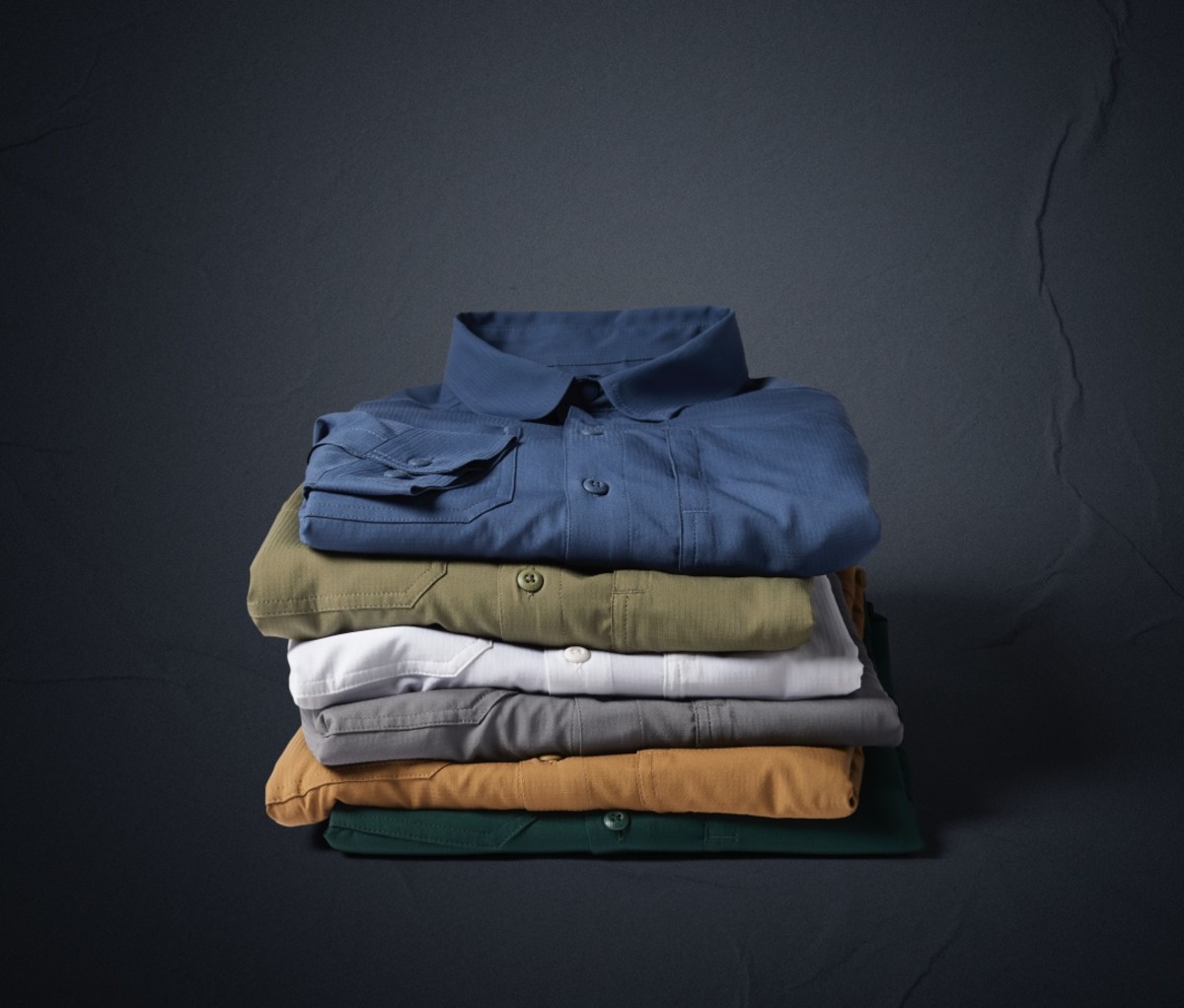 Utility Lite Longsleeve Courtesy Image
The Utility Lite Longsleeve and Utility Lite Plaid Longsleeve feature snap buttons at the collar—which makes them easy to open up when conditions get hot—and Omni-Shade UPF 50 sun protection, so you won’t have to slather your whole body in sunscreen. They also come with double chest pockets for convenient storage, they’re made with durable recycled polyester fabric, and they have a timeless silhouette for a laid-back look.

The Utility Pant is made with a moisture wicking, two-way stretch fabric that moves with you, and it also comes with an integrated removable belt for a snug fit and four pockets to keep your on-trail essentials close at hand. Expecting hot weather? Reach for the Utility Convertible Pant, which turns into a pair of classic shorts just by zipping off the pant legs.
Once you’ve packed the right gear for your trip, you’re ready to choose a trail. Below, we’ve compiled a list of some of the best trails for backpacking and day-hiking—from the West Coast to the East Coast—to add to your bucket list. Whether you’re an experienced backpacker or you’re just starting out, there’s something for you here: Tackle the full trail length or split them up into sections for more approachable hikes. Either way, you’ll get a true backcountry challenge and incredible views to boot.

1. John Muir Trail in California
One of the most iconic routes in the world, the John Muir Trail (its original native name is Nüümü Poyo) stretches 211 miles through the Sierra Nevada mountain range in California. The trail passes through Yosemite, Kings Canyon, and Sequoia National Parks and passes through some of the world’s finest mountain scenery along the way. Hikers can expect towering granite cliffs, steep climbs, high altitudes, lush meadows, backcountry lakes, and ancient forests.
When you don’t have three weeks to spare for the full thru-hike, section hiking the trail is a more accessible alternative for experiencing this incredible route. The best segments for spending a few nights in the wild include Yosemite Valley to Tuolumne Meadows (about 20 miles) or Kearsarge to Whitney Portal (about 49 miles).
The Day Trip Mod: Visit one of the main destinations along the route, such as the impressive Devil’s Postpile National Monument or Sequoia National Park. Find parking nearby and follow the trail for a few miles for an out-and-back day excursion.

2. Presidential Traverse in New Hampshire
Although it’s one the shorter routes on this list, the Presidential Traverse is just as challenging and rewarding as the longer hikes. For about 20 miles, this classic New England trail ascends and descends some of New Hampshire’s highest peaks. The trip is most enjoyable when completed over two or three nights, and you’ll have the option to stay at Appalachian Mountain Club huts along the way.
The White Mountains are notorious for strenuous conditions made more difficult by bad weather, but don’t get discouraged: With little tree coverage, the views of the valleys and surrounding mountains are constantly panoramic.
The Day Trip Mod: For a doable day hike, try one or two of the peaks along the route, such as a 7.5-mile loop of Mt. Clay and Mt. Jefferson. The trail gains 3,600 feet and features panoramic views of the surrounding area.

3. Uinta Highline Trail in Utah
The Uinta Highline Trail stays above 10,000 feet for the majority of its 104 miles, which makes it the crème de la crème of Utah hiking. This point-to-point trail follows the Uinta Mountains from Mirror Lake to a forest service road north of Vernal, UT, and it covers over 16,000 feet of elevation gain. Along the way, you’ll pass through rock scrambles, hike over gentle meadows speckled with wildflowers, and skirt stunning lakes and creeks. This trail is a serious challenge, so it’s best to spend 10 days hiking 10-mile sections to complete its entirety.
The Day Trip Mod: You don’t have to be a pro to get a taste of the Uinta Highline Trail. For a more manageable day hike or overnighter, try a 16.8-mile out-and-back jaunt from Mirror Lake to Blue Lake, which also passes a number of other beautiful bodies of water. There’s also a scenic 10.5-mile point-to-point route from Dime Lake to Chepeta Lake. You can also make a pitstop to Red Castle (shown above) via the China Meadows Trailhead.

4. Timberline Trail in Oregon
Circumnavigate Mt. Hood at or above the tree line on the Timberline Trail, a 41-mile trail with around 10,300 feet of elevation gain. Snag a free permit at a trailhead kiosk before you start your journey, and then treat yourself to incredible vistas, waterfalls, alpine meadows, and lush forests at every turn. Most people complete the full trail in three days and four nights.
The Day Trip Mod: The Timberline Trail is accessible from many points around the mountain’s base, so you can easily break it up into sections. Try hiking Cloud Cap south to Newton Creek, a six-mile section with one stream crossing, or hike Top Spur east to Cloud Cap, an 11.3-mile trek on the mountain’s north side.
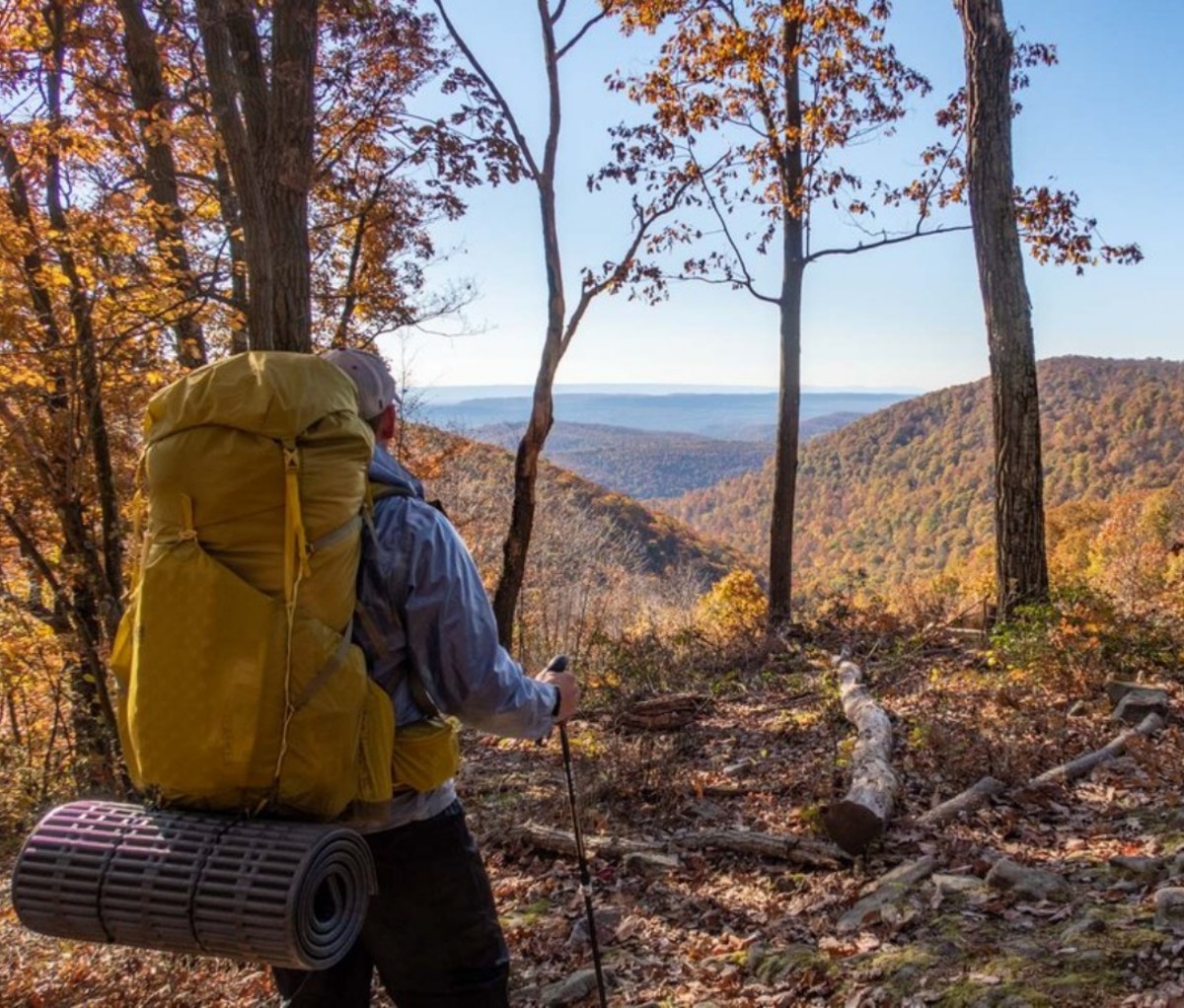
5. Allegheny Front Trail in Pennsylvania
This 42-mile loop is ideal for backpacking over a long weekend. The Allegheny Front Trail links hiking trails, old logging roads, state forest roads, and Native American paths through Pennsylvania’s Moshannon State Forest. The trail snakes through a variety of habitats, including wetlands, forests, and rhododendron thickets. Rated as moderately challenging with just over 5,000 feet in elevation gain, the Allegheny Front Trail is a popular first backpacking trip for novices.
The Day Trip Mod: Using the side trails, shorter trips are also easily accessible. The 8.8-mile Moss Hanne Trail (which includes part of the greater Allegheny Front Trail) crosses boardwalks through the forest and wetlands, while the Six-Mile Run section meanders parallel to a stream.
from Men's Journal https://ift.tt/wezxWjQ
Nutritionist-Approved Ways To Strengthen Your Hair Through Food
If you want to achieve your healthy hair goals, start including the mentioned food items in your diet.
from NDTV Food-Latest https://ift.tt/L7j1tc2
from NDTV Food-Latest https://ift.tt/L7j1tc2
Subscribe to:
Comments (Atom)