Men’s Journal aims to feature only the best products and services. If you buy something via one of our links, we may earn a commission.
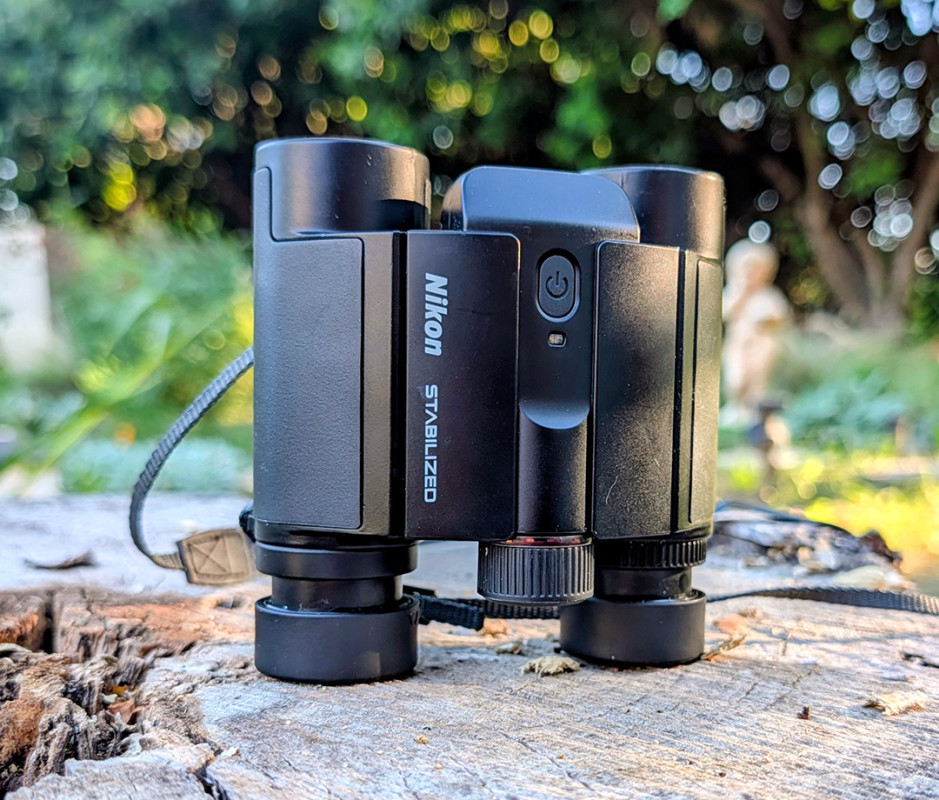
I used to think birdwatching was a niche hobby—until a pair of Nikon Stabilized 10x25 S Binoculars completely changed my mind. What started as a casual glance at a flicker of movement turned into a full-blown obsession, all thanks to compact binoculars that make spotting—and actually identifying—birds dramatically easier.
Designed for birding, hiking, and everyday carry, these image-stabilized binoculars solve one of the biggest frustrations with high magnification: shaky hands. With 10x zoom in a pocket-size design, they bring distant wildlife into sharp focus without the usual blur—making them ideal for anyone who wants powerful optics without hauling bulky gear.
At 10x magnification, these should be twitchy little beasts demanding a tripod and a strong core. But Nikon’s stabilization system immediately cuts the tremors that usually plague high-power compact glass. Press the IS button with your index finger and the bobbing world snaps into control. It doesn’t freeze like a sci-fi visor, but the wobble collapses enough to turn fleeting shapes into birds with actual field marks.
Optically, Nikon does what Nikon does: ED glass keeps color fringing at bay, contrast stays crisp, and the small 25mm objectives pull in an impressive amount of light. Under a canopy or in the pink-blue minutes after sunset—situations where many compacts give up—these still deliver a surprisingly bright, clean image. They feel closer to a mid-size pair than their pocket form factor suggests.
David Weiss
Build quality is classic Nikon: rubber-armored, understated, and capable of surviving real-world abuse. The focus wheel has reassuring resistance, the eyecups click cleanly, and the whole package feels substantial without being brick-like. They’re labeled “weather-resistant,” which translates to “fine in a drizzle, not a dive”
The user experience is where these binoculars separate themselves. Stabilization activates instantly, without mechanical drama, relying on a small battery that lasts long enough you’ll forget the last time you changed it. The auto-shutoff helps, preventing absent-minded energy drain. What the stabilization really does, though, is change your behavior as a birder. Instead of rushing to ID before wobble becomes fatigue, you linger. You watch tail flicks, feeding styles, and subtle posture shifts. You appreciate feather detail. They don’t just steady the optics—they steady your pace.
Of course, they’re not perfect for every task. If you’re scanning broad landscapes for movement, a traditional 8x with a wider field of view feels more relaxed. The 12x25s are tools for targeted observation: find the bird, study the bird, enjoy the bird. Stabilization adds a touch of weight compared to typical ultra-light compacts, but not enough to matter unless you’re counting grams.
Price-wise, Nikon puts these firmly in “premium compact” territory. Casual backyard birders might balk, but anyone who frequently finds themselves trying to ID a distant raptor or a small warbler in wind-shaken branches will see the value almost immediately. These binoculars turn situations that usually end with “Ah well, couldn’t quite tell” into confident identifications (p.s, download the Merlin Bird ID app to translate faint birdsong into reliable info).
In the end, Nikon’s stabilized 10x25s aren’t vying to be do-everything binoculars. They’re trying to be the compact, high-magnification pair you can actually use without frustration—and they succeed. They combine clarity, portability, and stabilization in a way that invites more observing and less fuss. Slip them into a jacket or pack, and you suddenly find yourself birding more often, and more enjoyably, than you expected. For any modern birder who wants real reach without real bulk, they’re as close to a no-brainer as compact optics get. Consider me de-snobbed.
from Men's Journal https://ift.tt/q1S7Dmc

No comments:
Post a Comment