Pressure washing is one of the best ways to clean concrete. But as with most pressure washer jobs, there’s a right way to do it and wrong way. Concrete may seem indestructible, but use the wrong nozzle or wrong technique when cleaning your concrete driveway and walks and you may end up doing significant damage to it.
Related: Pressure Washing vs. Soft Washing: Which is Safer for Your Home?
Using Too Much Pressure
Whether you’re using a pressure washer to clean your driveway, home, or car, using the right nozzle and technique is crucial. Using the wrong nozzle will leave your concrete with striping patterns, a rough uneven texture, and streaks. When that happens, repairing it is very difficult.
Why This Happens
There are two main reasons why pressure washing etches concrete:
- Narrow spray tip: Many people use a zero degree nozzle to get max pressure for blasting away grime and mildew. The problem with that approach is that the narrow spray tip creates a stream of water that’s so powerful that it can actually cut into the concrete.
- Holding the wand too close: As with the spray tip, holding the wand close to the concrete seems like a good way to remove stubborn stains. Holding the wand too close to the concrete concentrates all of that pressure in one place, which can etch, crack, or chip the concrete.
- Moving too slowly: When pressure washing concrete, or any other surface, it’s important to keep the wand moving over the surface area. Lingering on any one area can cause the high pressure water to eat into the concrete.
Why It’s a Major Problem
Etched concrete isn’t just aesthetic damage, it can also cause structural problems. Once you've etched the concrete, you’ve broken through the seal that’s on top of it. With that seal broken, water can penetrate deeper into the concrete, breaking it down more quickly. The damage also makes the porous concrete more susceptible to dirt and stains.
How to Pressure Wash Concrete the Right Way
You can avoid damaging your concrete while cleaning it by following these three rules:
Use a wide spray tip
A wide spray tip will deliver less pressure in a focused area, making it safer for your concrete. Use a spray tip that’s between 25 degrees and 40 degrees, which reduces the risk of damaging the concrete. Spray a small inconspicuous area of the concrete first to test your settings.
Maintain a Safe Distance
Resist the urge to put the tip close to the concrete to take out stubborn stains. Hold the wand about 10 to 12 inches from the concrete surface to prevent applying focused pressure on the one part of the concrete.
Related: This is the Best Time to Pressure Wash Your Home
Keep it Moving
Don’t keep the tip of the wand aimed at the same spot. Keep the wand moving at all times over the area. Make smooth even passes to prevent streaking.
A Better Concrete Cleaning Option
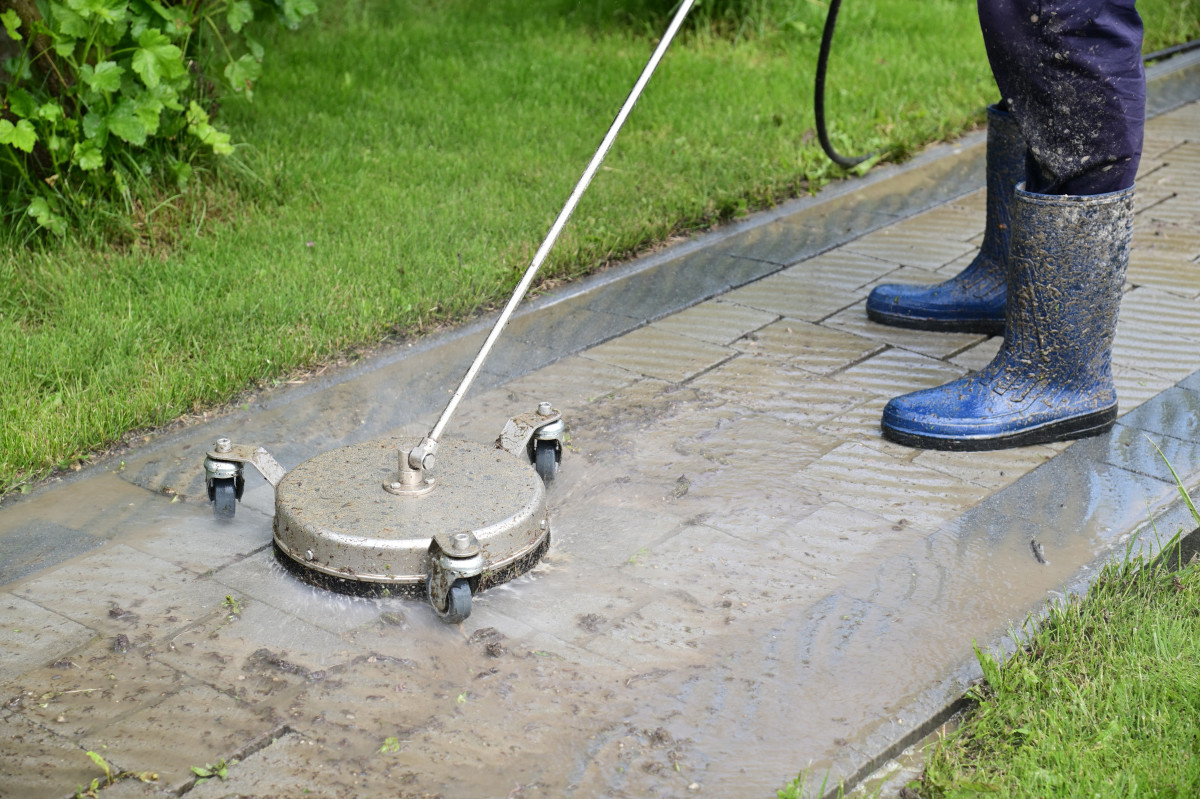
A more effective, safer, and less time consuming option for cleaning broad areas of concrete is to use a surface cleaner attachment. These tools attach to your pressure washer and use high pressure rotating jets that clean the concrete surface without damaging it. Since they cover a broad 15-inch wide area, they clean without leaving streaks, giving you much better results than a pressure washer wand.
from Men's Journal https://ift.tt/Rkxob1T