Researchers have created a new AI tool to predict secondary heart attacks in people with cancer.
Cancer treatments like chemotherapy and radiation, while very effective, can harm the heart. It’s called cardiotoxicity and is a common side effect. Once you have one, you are at risk for a second heart attack.
Scientists from the University of Leicester in England have pioneered an artificial intelligence (AI) tool to predict the risk for people with cancer. The tool, called ONCO-ACS, uses AI to combine cancer-related factors with clinical data to predict the risk of another heart attack, major bleeding, or death within six months. The researchers analyzed data of nearly 50,000 people with cancer across England, Sweden,and Switzerland and published their findings in The Lancet. Having this knowledge can help healthcare professionals tailor treatments for this patient population.
Florian A. Wenzl, M.D., a University of Leicester Honorary fellow and first author on the paper, said: "Cancer patients with heart attacks have long been neglected in clinical research, despite being one of the most challenging groups we see in cardiology.”
This could be a game-changer for oncologists, cardiologists, and the patients they treat. According to the Lancet article, this is the “largest study on risk assessment in patients with cancer and acute coronary syndrome to date.”
"Now this new tool is able to give doctors reliable information to tailor treatment and balance the benefits and harms," Dr. Wenzl added, in a news release.
Cardiotoxicity risk is higher if you are taking certain medications or undergoing therapies, such as radiation therapy to the chest, according to the Cleveland Clinic, so it’s a good idea to ask your oncologist about the risk of heart damage, irregular heart rhythms, a change in blood pressure, or heart rate, before you start a new therapy. For the most part, it’s worth the risk to eradicate cancer.
Now that a severe winter storm is battering multiple states, forecasts are warning of escalating conditions, including wind gusts that will reach 80 mph. Based on how destructive the weather system is, many government leaders are asking the residents of their state to stay home and off the road.
North Carolina Leaders: Stay Home and Off Roads Through Early Next Week
Governor Josh Stein speaking to his state’s residents at a public event. (Photo: Allison Joyce/Bloomberg via Getty Images)
North Carolina Governor Josh Stein and Emergency Management Director Will Ray are urging residents to avoid road travel unless completely unavoidable. In official statements, the pair asked people to stay off the roadways through early next week.
North Carolina Governor Josh Stein:
“Snow accumulation, strong winds and dangerously cold temperatures will make travel unsafe, so I urge people to prepare now and stay off the roads unless absolutely necessary.”
Emergency Management Director Will Ray:
“All North Carolinians should be finalizing plans now and should be prepared to stay home and off the roadways starting tonight through early next week.”
Virginia Governor: Stay Off Roads From Saturday Night Through Monday Morning
Virginia Governor Abigail Spanberger speaks during a press conference. (Photo by Win McNamee/Getty Images)
Virginia Governor Abigail Spanberger is asking residents of her state to stay off the roads during and immediately after the ongoing storm. As an ABC 13 News Now article shows, Gov. Spanberger first asked people to avoid road travel on January 22, 2026.
Governor Abigail Spanberger:
“We are anticipating this storm to hit strongly later today. Every Virginian should stay off the road as of this evening, all day Sunday, and at least into Monday morning.”
Recently, the Virginia website has extended the state's request for the roads to stay clear. "Stay off the roads during the storm. Individuals with chronic conditions (like kidney failure) should reach out to their healthcare provider to make sure they have a care plan in place while travel is limited."
Georgia Officials: Avoid Travel This Weekend
Governor Brian Kemp speaks at a press conference in Atlanta, Georgia. (Photo by Elijah Nouvelage/Getty Images)
On January 30, 2026, Georgia's official website issued a press release from the office of Governor Brian Kemp. That statement requested that people stay home and provided some guidance if travel cannot be avoided.
The Office of Governor Brian Kemp:
"Residents are urged to avoid travel in the most impacted areas whenever possible this weekend. For those who must travel, GDOT advises motorists to exercise caution and provide ample space for crews to continue treating and clearing roads."
South Carolina Governor: Stay Off Roads Unless Absolutely Necessary
South Carolina Gov. Henry McMaster speaks from the South Carolina Emergency Management Division headquarters. (Joshua Boucher/The State/Tribune News Service via Getty Images)
On January 29, 2026, Governor Henry McMaster posted on X about the ongoing winter storm. While he noted that this weekend's effects may be less severe than last week's, he extended the state of emergency and asked people to stay off the roads.
Governor Henry McMaster:
"Stay off the roads unless absolutely necessary. As a precaution, last Wednesday’s state of emergency has remained in effect for this weekend."
South Carolina is likely to see some dry fluffy snow accumulation ❄️❄️❄️❄️ and cold temperatures 🌡️ this weekend – great for outdoor fun, pictures, and snowmen ☃️☃️ – but not for driving.
Unlike last weekend, there’s no threat of deadly ice damage and extended power outages –…
A wealthy couple. A notorious conman. And a mansion built in one of the most inhospitable environments on Earth—Death Valley. It’s no wonder that more than 100,000 people once visited Death Valley Ranch, a.k.a. Scotty’s Castle, every year to take tours of the 1920s-era home, which still had its original furnishings.
But when the area surrounding the home experienced a year's worth of rain in five hours on October 18, 2015, causing “a flash flood of mud and rocks … flowing at an estimated 3,200 cubic feet per second,” according to the NPS, Scotty’s Castle was forced to close. Funding and staffing challenges and a fire in 2021—not to mention laws surrounding the preservation of natural and historical landmarks and the COVID-19 pandemic—have kept it closed ever since.
Until now. More than a decade after it closed, Scotty’s Castle will be reopening for limited tours, according to the Associated Press.
The History of Scotty’s Castle
Born in Kentucky in 1872, Walter Scott (also known as Death Valley Scotty) was an expert horse rider who spent 12 years as a seasonal rough rider in Buffalo Bill’s Wild West Show, returning to Death Valley in between engagements to work. When he left the show for good in 1902, he went back to Death Valley once again—and began running an ambitious con.
Scotty approached a few successful businessmen and convinced them to invest in a gold mining operation in Death Valley. One of them was millionaire Albert Mussey Johnson, an insurance tycoon from Chicago who invested thousands in the enterprise. When Scott didn’t deliver any gold after several years—according to the NPS, he claimed that “a number of calamities prevented [its] delivery”—Johnson asked to take a tour of the mine himself.
Scotty kept his poker face. When Johnson arrived, the conman took him on a journey through Death Valley on horseback, betting that it would be too much for Johnson—who, besides behind a city guy through and through, had, as a young man, been in a train accident that broke his back (and killed his father). But Johnson fell in love with Death Valley. On that first trip, he stayed for almost a month. And even though he never set eyes on Scott’s gold mine, he became fond of the conman and considered him a friend.
For 10 years, Johnson returned to Death Valley to see Scotty; his wife, Bessie, eventually came, too. She suggested they build a winter vacation home there so they could “get away from the rattlesnakes and scorpions,” and construction began in Grapevine Canyon in the 1920s. The home started as a few box-like structures before evolving into a Mediterranean-style structure.
Never one to let an opportunity pass him by, Scotty claimed that he was the one building Death Valley Ranch—using all the money he’d made from his goldmine to foot the $2 million cost, of course. The mine was also supposedly under the property—Abby Wines, acting deputy superintendent of Death Valley National Park, told the AP that servants would go to tunnels under the home and bang pots and pans to simulate the sounds of miners hard at work.
The Johnsons went along with the story; according to Wine, they found it funny. Yes, Johnson told reporters, Death Valley Ranch was Scott’s home. He was merely “Scotty’s banker.”
Johnson stopped construction on Death Valley Ranch in 1931, when he found out he was building on federal land because of a surveying mistake. Construction never resumed due to the Great Depression, and Scotty’s Castle remained incomplete, though the Johnsons still vacationed there.
Johnson eventually moved to Los Angeles and died in 1948. Scott was allowed to live at “his” castle until his death in 1954. The National Park Service purchased the property in 1970.
When Will Scotty’s Castle Reopen for Good?
The flood recovery tours—which cost $35 each—will begin in March, but they’re already sold out. According to the AP, the funds from the tours will go toward the $90 million restoration of the property. The National Park Service anticipates a full reopening in a few years. In the meantime, you can take a virtual tour of the space in 3D here.
We hear all about the loneliness epidemic these days. The surgeon general even released an 80-page report on the topic in 2023, declaring that "lacking social connection is as dangerous as smoking up to 15 cigarettes a day." So if you're lonely and smoking 15 cigarettes a day, you're cooked.
Of course, COVID exacerbated social disconnection to never-before-seen levels. But long before the world shut down and we had to hunker down in our homes, the Free Hugs movement aimed to spread connection among strangers all around the world.
Well, it turns out even large corporate conglomerates need some love from time to time. Instagram user Christi Sikes spotted a Coca-Cola vending machine in her local Walmart that was yearning for some love. The machine had an image of a heart encasing a Coke bottle, with the words "Hug Me" printed boldly underneath. The machine was practically begging for some human connection.
Cautiously, Sikes went up and hugged the machine. Then, she reached into the hole and pulled out a can of Coke. What a lovely reward.
It turns out the needy Coke vending machines have actually been around for quite some time. Per Ads of the World, they first popped up in Singapore back in April 2012. Since then, they've popped up sporadically, often on college campuses. The machine made an appearance at the University of Georgia in 2017, and at Georgia Southern University in 2019.
“Whether you were hugging the machine or experiencing the event online, our goal was the same – to put a smile on your face and share that emotional connection,” a company spokesperson said in a 2019 press release, per Coca-Cola United. “Reactions were amazing… people really had fun with it and at one point we had four to five people hugging the machine at the same time as well as each other!”
Whether you keep your tools in a workshop, shed, garage, or even your basement, tool organization is essential for both efficiency and convenience when you're ready to get started on a DIY project. Not only do tool storage solutions make it easier to locate your tools quickly, but if you organize hand tools, power tools, and tool accessories, then they won't take up as much space in your workshop.
Even small workshop organization tricks can effectively change the way you store and access your tools for projects around the home. Learning about power tool storage ideas that keep them up off the ground and tool wall ideas for hanging larger yard tools, can help you take a big step toward total garage tool organization. Throughout this guide we discuss a variety of tool organization ideas for garage storage, basement storage, and more, so take this chance to discover how to better organize your home.
Why Tool Organization Matters More Than You Think
Time Savings, Safety, and Tool Longevity
Tool organization is critical for enhancing safety, efficiency, and tool health within your garage or workshop, as cluttered spaces lead to wasted time, unnecessary tool replacements, and increased risk of injury. Proper storage prevents damage from dust and rust, improves workflow, and reduces the mental burden of searching for equipment.
“Tool organization matters for the same reasons any home organization matters: You want to be able to find what you need quickly so you can actually tackle the task. When your tools are organized, it reduces stress, saves you money (you’re not rebuying what you already own), and keeps projects moving,” says Jenny Dietsch, Certified Professional Organizer® (CPO®), founder, and CEO at Getting it Done Organizing.
The Hidden Cost of Cluttered Tools
You can waste hours searching for tools. This inefficiency disrupts DIY project timelines and lowers overall productivity. Additionally, disorganized tools are easily lost, damaged, or stolen, forcing unnecessary, costly replacements. Clutter also increases the risk of tripping, falling, or experiencing accidents from improperly stored sharp or heavy objects, while improper storage leaves tools exposed to damage from environmental factors like rust, dust, and grease, reducing their longevity and forcing you to spend more on replacement tools.
How to Organize Tools: Start With a Simple Tool Organization Plan
Take Inventory of What You Actually Own
The first thing you should do when organizing your tools is to find out what you actually own. Without knowing what you have, it’s difficult to create a functional space that includes proper storage for every tool and tool accessory. “I always tell people to start with a big clear surface and a true sort. Set up a folding table and pull everything out. Once you can see what you have, you can decide what to purge (duplicates, broken tools) and then design a system around the way you actually work,” notes Dietsch.
Group Tools By Use, Not By Size
There are many convenient ways to sort your tools, but if you rely solely on how easy it is to store them, then you are neglecting the potential difficulty in finding them later on. Dietsch explains that you should “group like-with-like and give each category a defined ‘home’ so you can put it back in the same place every time. Sort tools by category like hammers, screwdrivers, wrenches, drill bits, nails, screws, nuts and bolts, etc.”
Decide What Needs Quick Access vs Storage
Some tools are used more frequently than others, so it only makes sense that your tool organization should reflect these differences. Tools that you use regularly should be kept in areas where they are easy to find and easy to access, while tools that are rarely used, like seasonal tools, ladders, and other less frequently used tools, should be kept in storage spaces that are more out of the way, like overhead storage or wall storage.
Even something as simple as keeping your most commonly used screwdrivers in the top drawer of a tool chest instead of the bottom drawer can save you time and effort when you are in the middle of a project.
One of the most common choices for wall-based tool organization is using a pegboard above a workbench. “Pegboard systems are great. They have hooks, shelves, and cups for screwdrivers, wrenches, scissors, tape measures, and small everyday tools,” Dietsch says.
Choosing between classic and modern pegboard systems for tool organization depends largely on your need for weight capacity, aesthetic preference, and budget. While classic fiberboard/wood offers affordability and familiar, universal compatibility, modern metal or plastic systems provide superior strength, durability, and a cleaner aesthetic.
Slatwall and Track Systems
Slatwall and track systems offer superior, flexible, and heavy-duty alternatives to traditional, rigid storage methods. Slatwall consists of vertical panels with horizontal grooves that accept a wide range of accessories, such as hooks, baskets, and shelves, while track systems are horizontal rails attached to wall studs, with hooks and bins that attach to and move along the rail.
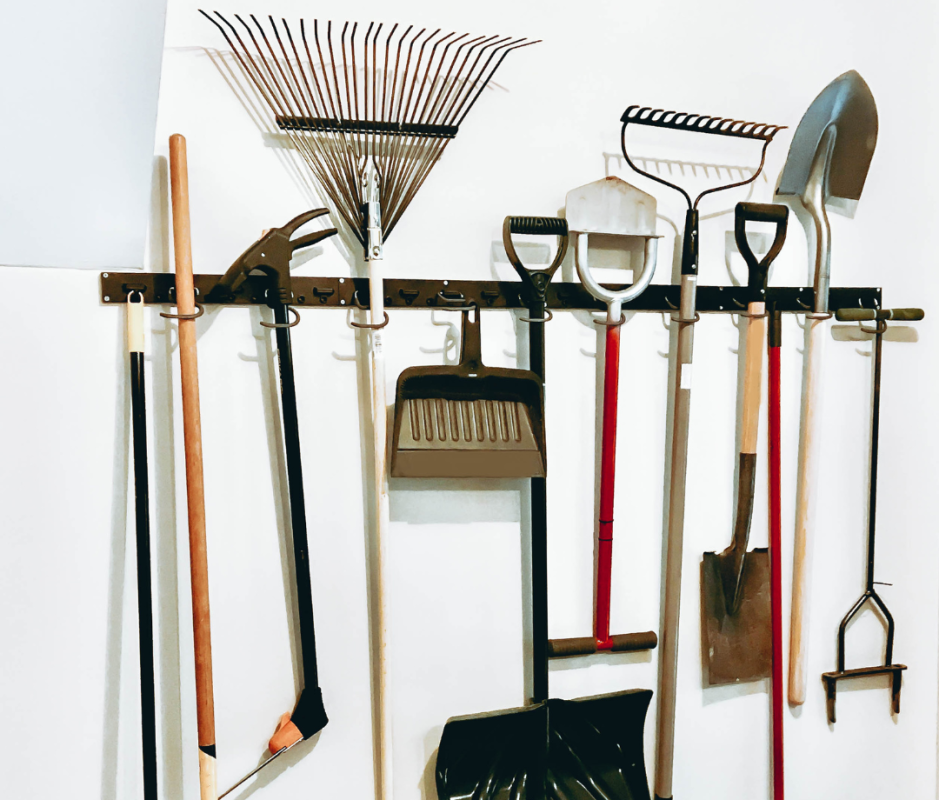
Both systems utilize vertical space to free up floor area, allowing for customized, easily adjustable configurations for tools, garden equipment, and sports gear. Dietsch mentions that “track/rail systems are perfect for hanging yard tools, brooms, mops, leaf blowers, and extension cords. The goal is to make your most-used tools instantly visible and grab‑and‑go.”
Magnetic Tool Strips
Magnetic tool strips offer a high-strength, space-saving, and accessible solution for wall-based organization, ideal for holding metal hand tools like pliers, wrenches, and screwdrivers. They take advantage of vertical, underutilized space to clear clutter from benches, providing immediate visibility and easy grab-and-go access to frequently used tools.
Install multiple magnetic strips directly above a workbench to hold commonly used tools, keeping the work surface clear. Alternatively, you could use magnetic strips in combination with slatwall systems for a versatile, customizable, and high-capacity storage wall.
French Cleats for Flexible Layouts
French cleats provide a highly versatile, strong, and adjustable wall-based organization system, utilizing plywood strips with 45-degree beveled edges to interlock tool holders, shelves, and cabinets. They offer superior weight capacity and allow for effortless reconfiguration, making them ideal for custom workshop storage.
The 45-degree angled, interlocking design uses gravity to securely support heavy tools and machinery. Holders can be moved, rearranged, or swapped between walls instantly without needing to drill new holes or patch old ones, and you can build specialized holders (shelves, hooks, bins) for specific tools using scraps.
In tight areas, take advantage of vertical space as much as possible by hanging larger tools and gear.
Getty Images
Tool Storage for Drawers and Cabinets
Foam Drawer Inserts
Tool storage foam inserts, available as custom-cut or pre-cut sheets, protect tools from damage, reduce clutter, and enable quick inventory checks. Custom inserts are tailored to the exact profile of each tool for maximum protection, security, and professional look. They are ideal for high-value tools, preventing them from moving, and creating shadowing to instantly identify missing items. Though, custom inserts have a higher upfront cost and time investment for design, layout, and cutting. They are also less flexible if tool collections change frequently.
Pre-cut inserts are generally lower cost and faster to implement than custom inserts. Many options feature grid-based, tear-resistant foam allowing for easy cutting and peeling to shape, but these inserts are limited to specific, often generic sizes that may not fit odd-shaped tools perfectly.
Adjustable Dividers and Trays
Adjustable dividers and trays for tool storage in drawers and cabinets maximize space efficiency by creating custom-fit compartments that prevent tools from sliding, which reduces damage and speeds up retrieval. “Drawer organizers with multiple small compartments are a must for sorting screws, nails, drill bits, picture‑hanging hardware, and specialty pieces,” says Dietsch. They transform chaotic "dump and run" areas into organized systems, allowing for flexibility as tool collections evolve.
Labeling for Fast Access
While you can rely on your own knowledge to identify items on sight, it’s far easier to simply label the drawers and cabinets where you keep specific tools, especially if you ever work with another person who may not have the same experience as you. Dietsch notes that you should also “add labeled bins inside cabinets for ‘painting,’ ‘electrical,’ ‘plumbing,’ etc., so you’re grabbing a whole category at once instead of rummaging.”
Mounting your power tools on the wall can be a convenient method for keeping them organized and out of the way when you are working. Common options include using steel racks, pegboards, and wall-mounted charging stations, allowing you to maximize garage space by vertically storing drills, saws, and batteries.
Metal or wood racks with slots designed specifically for hanging drills and impact drivers, as well as mounted shelving units designed to hold chargers, batteries, and smaller tools, are highly effective, especially when they have built-in cable management features.
Charging Station Setups
Creating a charging station for your battery-powered tools will help to ensure your batteries are fully charged when you need them, while also organizing your tools and batteries. “Use a bench or shelf near an outlet (or a bench with an integrated power strip) to create one place for chargers and batteries, with cords managed so they’re not a tangled mess,” suggests Dietsch.
You could also construct a dedicated, wall-mounted cabinet with a top shelf for chargers and lower slots to hang drills, or use heavy-duty hooks on a pegboard to hang tools, placing chargers on a nearby sturdy shelf. Similarly, mounting a small kitchen cabinet or locker and installing a power strip inside to hide messy cords can be a great choice for a convenient charging station setup.
Cord and Battery Management
Organize power tools, cords, and batteries with wall-mounted racks, charging stations, and dedicated storage to maximize workshop space and improve efficiency. Dietsch notes that you could “have designated drawers in your tool bench for drills, sanders, nail guns, etc., with cords neatly wrapped.”
Other solutions include under-shelf mounting to store batteries and neatly wrapped cords, wall-mounted racks that can be used to hang tools, allowing cords to hang freely without tangling, or using Velcro cable ties, zip ties, or specialized cord wraps to keep cords neatly bundled when not in use.
Storing Large Tools Safely
Large power tools can be stored safely and efficiently by utilizing heavy-duty vertical storage solutions to maximize space and reduce clutter. Diestch mentions that “for power tools, you want both protection and easy access. Use heavy-duty wall hooks for larger items like leaf blowers or weed eaters so they’re off the floor but easy to grab.”
You can also use deep-drawer cabinets, for large tools like circular saws, or install metal racks on wall studs for extensive large tool storage space. Similarly, overhead storage shelves or ceiling-mounted racks can provide space for ladders and other less frequently used tools.
Tool boxes are the classic option for convenient tool storage. Depending on the size of the tool box, you may be able to carry it around easily, allowing you to bring a full set of tools directly to the area where you are working, rather than having to go back and forth to the workshop, but these storage devices tend to be smaller and hold less than a rolling tool chest.
Conversely, rolling tool chests or carts provide superior, organized capacity for fixed workshops. They typically have multiple drawers of varying sizes allowing you to store a wide variety of power tools, hand tools, and accessories. Ultimately, the best choice depends on whether portability or high-volume storage is prioritized.
Modular Storage Systems
Modular tool storage systems offer customizable, stackable, and often wheeled solutions for job sites or workshops. These systems feature interlocking boxes, drawers, and organizers designed for durability, easy transport, and efficient organization of tools and small parts. Components can be reconfigured or expanded as tool collections grow, with options including drawer units, small parts organizers with transparent lids, and rolling tool carts.
When Portability Beats Permanent Storage
Portable tool storage is superior to permanent, fixed storage in scenarios requiring high mobility, adaptability to changing workspaces, and immediate, on-site access. While fixed cabinets are ideal for workshops, portability wins when tools must travel between sites, accommodate tight spaces, or improve daily efficiency through organized, mobile systems.
For contractors, technicians, and tradespeople, portable storage (rolling tool chests, modular systems) allows tools to move from a vehicle to the immediate work area, eliminating wasted time walking back and forth to a truck or stationary shed. Similarly, if you work across multiple sites or projects, modular, detachable systems enable you to take only the necessary tools, keeping them organized on the go.
It’s very important to assess the space you have when you are coming up with an effective tool organization plan. “In small spaces, you have to go vertical and think in layers. Simple shelves or wall-mounted systems are going to be your best friend. You could also try narrow shelving units or freestanding metal racks with stackable bins,” says Dietsch. Utilizing the vertical space in your garage is essential for efficient tool organization.
Under-Shelf and Ceiling-Mounted Options
To make the most of a small area, it’s recommended to use under-shelf and ceiling-mounted solutions to free up floor space. Install magnetic tool strips on the underside of shelves or cabinets to securely hold screwdrivers, wrenches, and pliers. Attach small plastic bins or trays under existing shelves for hardware, nails, and screws. Utilize pegboards on walls or, if space allows, under large, sturdy shelving units to keep tools in plain sight.
You can also install heavy-duty hooks or purpose-built ceiling racks on ceiling joists to store long-handled gardening tools, ladders, or rarely used items, while DIY drop-down shelves are ideal for overhead storage of your equipment.
Multi-Use Furniture and Fold-Down Benches
When possible, look for garage or workshop furniture with built-in storage. This could be as simple as a rolling stool with a storage drawer underneath the seat or as complex as a full fold-down workbench that can transition from a simple storage shelf when folded up to a workbench when folded down. Another good option is to take advantage of any space underneath a workbench to build storage compartments for your tools and accessories, so you take advantage of every available bit of space.
Making tool organizers from scrap wood, such as plywood strips, 2x4s, or pallet wood, offers customizable, cost-effective storage solutions for workshops and garages. Popular projects include wall-mounted racks with angled slots for hand tools, custom-fit tool holsters, and small benchtop organizers.
Make notched, angled slots to hold rakes, shovels, and brooms on the wall.
Construct small, modular boxes or racks for frequently used tools, using walnut or pine scraps for a durable, customized workspace.
Use plywood scraps to create tailored holders for hammers, screwdrivers, and pliers by drilling specific hole sizes or cutting slots to fit the tools.
PVC Pipe Organizers
PVC pipe can be another great material to make DIY tool organizers for your garage, providing a cheap, customizable, and durable solution for workshop clutter. Key projects include angled pipe holders for drills, PVC grid racks, pegboard attachments for small items, and mounted tubes for long-handled tools.
Cut PVC pipe (3-inch diameter) at a 45-degree angle, then screw the straight end to a wall-mounted board, creating a pocket where you can slide in drill handles.
Cut 1.5-inch to 2-inch PVC pipe into sections for storing tools like pliers, hacksaws, and screwdrivers, mounting them directly onto wooden studs or plywood.
Cut small pieces of PVC and slide them over existing pegboard hooks to create small cubbyholes for pencils, markers, and small tools.
Thread paracord or rope through a length of 3/4 inch PVC pipe to hold rolls of tape, wire, or cord, then hang the ends on wall hooks.
Cut 30 cm lengths of pipe, halved at a 45-degree angle, to create strong, individual, or clustered holders for long-handled gardening tools.
Repurposed Household Items
Repurposing common household items can be highly effective for DIY tool organization and to help save money as well as reduce clutter. Some ideas using repurposed household items include old jars for hardware storage, tin cans used as caddies for paintbrushes or hand tools, and old crates and shoe racks turned into efficient wall storage.
Screw jar lids into the underside of wooden shelves to store nails, screws, and small parts.
Clean empty tin cans (soup, vegetable) and mount them to a board or use them in a drawer to hold markers, pencils, or small hand tools.
Use a pallet to create a wall-mounted rack for gardening tools or long-handled tools like rakes and brooms.
Attach small plastic storage bins or pockets inside cabinet doors to hold small tools.
Budget-Friendly Builds That Actually Last
Your budget may be the thing holding you back from tackling a tool organization project, but with these budget-friendly options, you can save while organizing your tools. A few budget-friendly builds include French cleat walls, PVC pipe holders for power tools, plywood drawer dividers, and mobile cart systems that maximize space.
French cleats can be made into a highly customizable wall storage system made from plywood. The 45-degree bevel on the cleats allows for secure, adjustable hanging of tools, making it easy to rearrange as your collection grows.
Cut 3-inch or 4-inch PVC pipes to hold cordless drills, grinders, or flashlights, creating sturdy and cheap custom PVC pipe tool holders.
Using thin strips of plywood, build custom-fitted drawer dividers for tools, utilizing a "friction fit" so no glue or screws are needed.
Construct custom, sturdy plywood carts with casters to easily move tools around, providing durable, long-term storage.
Install inexpensive wire shelves or pegboards to maximize vertical storage in small workshops or garages.
A typical issue is a garage or workshop that looks clean and tidy until a single drawer is opened, revealing that a whole host of tools have been crammed inside. This doesn’t improve organization at all and may lead to damage, as tools bang against each other.
Additionally, Dietsch notes that “people mix everything together. Sharp tools and chemicals stored right next to kids’ sports gear, or every tool and random piece of hardware tossed into one giant bin or bag. That makes it hard to find anything and almost guarantees you’ll rebuy what you already own.”
Organizing By Appearance Instead of Function
Organizing tools by appearance, such as color-coding, matching sizes, or arranging for a "social media-perfect" look, rather than by function is a common, yet inefficient, approach that often sacrifices usability for aesthetics. This method leads to a disorganized, frustrating workspace where tools are hard to find and even harder to put away.
The garage or workshop may look great at first glance, but when you actually need to find a certain screwdriver or a specific wrench, you end up spending way more time than necessary searching your supposedly organized space.
Ignoring Future Tool Additions
Ignoring future tool additions when organizing is a common mistake that leads to overcrowded, inefficient, and chaotic workspaces. To avoid this, design storage systems with at least 20 to 30 percent extra capacity, use modular, expandable shelving or pegboards, and avoid rigid, fixed layouts that prevent future reorganization as new tools are acquired.
For those of you that have a completionist mindset that can’t ignore an empty space on a pegboard or on your shelves, consider using an enclosed cupboard-style storage solution so that you can just close the doors to get that peace of mind you desire without overfilling the space.
There are many ways you can organize your hand tools, but one of the best ways is to categorize them by type, such as wrenches, pliers, and screwdrivers, then store them in a dedicated tool storage space, like a rolling tool chest that utilizes drawer liners and labels for clear, easy identification.
Is Pegboard Still Worth Using?
Pegboard is still an excellent option for tool organization due to how affordable it is and the versatility it provides in organizing your tools. Pegboard maximizes wall space, keeping surfaces clear, and is ideal for quick access to frequently used hand tools, though it may not be ideal for heavy power tools when compared to metal alternatives.
How Do Professionals Organize Tools?
Professionals have a variety of ways to organize their tools, but they tend to prioritize accessibility, visibility, and standardization so that everything they need and everything they add has a place, allowing them to maximize their efficiency. Rolling cabinets or tool boxes are a common option, as well as specialized tool bags for convenience and portability.
What’s The Cheapest Way to Organize a Garage?
Generally, the cheapest way to organize the tools in your garage is with a combination of a pegboard system, stackable plastic bins, wall and ceiling hooks, as well as repurposed storage items, like old jars for nails and screws, wooden crates for larger tools, and plastic containers to store moisture-sensitive tools.
Amazon is constantly looking to improve its retail experience, and that includes its brick-and-mortar grocery locations. The Amazon Fresh and Go stores have been a staple of the company's business strategy for the last several years, but the retailer is set to move in a different direction.
The Amazon Fresh and Go stores will be sunset over the next several months in an effort to turn them into Whole Foods locations.
“After a careful evaluation of the business and how we can best serve customers, we’ve made the difficult decision to close our Amazon Go and Amazon Fresh physical stores, converting various locations into Whole Foods Market stores,” the company said in a statement on Tuesday.
Amazon will keep its Fresh delivery service for users on the main app, allowing the company to compete with apps like Instacart and DoorDash.
"We're grateful to our team members for their many contributions over the years and are working whenever possible to help them find roles elsewhere in Amazon, including across our vast operations network, as we make this transition," the statement reads.
Amazon will open 100 new Whole Foods locations within the next several years, and it also plans to expand its Whole Foods Daily Shops - mini-markets with specialized offerings for customers looking to save time.
Amazon Prioritizes Grocery Industry
Amazon acquired Whole Foods in 2017, spending $13.7 billion to purchase the organic-focused grocery chain. The sale was part of Amazon's continued effort to break into the grocery space after dominating many other areas of online commerce.
Amazon's Go stores opened in 2018, and the Fresh stores first opened in 2020. Stores were built to allow customers to walk in and take items from the shelves, with sensors and cameras installed to determine the cost of their carts.
As they left the store, the amount of their groceries would simply be deducted from their Amazon account and preferred method of payment.
Retail Stores Moving Forward at Amazon
At the time, Amazon CEO Jeff Bezos touted the stores for their technology.
“No one likes to wait in line,” Bezos told shareholders in 2018. “Instead, we imagined a store where you could walk in, pick up what you wanted, and leave.” The checkout-free technology was removed from the company's grocery stores in 2024, turning them into more traditional brick-and-mortar locations.
Moving forward, Amazon says that it is committed to developing more in-person shopping opportunities, including the "store within a store" concept currently on trial in Pennsylvania. Customers are able to shop for groceries while also picking up household essentials, all in one location.
Amazon says that its efforts continue to "develop a mass physical store format that brings customers distinctive selection, value, and convenience."
More than 11,000 flights have been cancelled due to widespread winter storms throughout the United States — and experts say things aren't going to necessarily get better anytime soon.
Flight Thrust CEO Patrick Arnzen explained in a statement shared with Men's Journal that travelers will have to be patient as airlines begin testing out weather conditions. "A major winter storm can shut down travel in a matter of hours, but it can take days to clear the backlog of canceled and delayed flights," he said.
Clearing the backlog isn't all airlines have to think about. He added, "Pilot shortages slow that recovery because there are fewer qualified crews to cover re-routes, extra sections and repositioning flights. Expanding access to high-quality flight training is how we help the system recover faster when the next big disruption hits."
Flight delays and cancellations are pretty typical of major weather events, and Arnzen also pointed out that the rate at which airports and airlines bounce back is often dictated by how many people are available to work.
"Big winter storms are a reminder that recovery depends on people as much as planes," he also said. "When delays and cancellations stack up, airlines need enough qualified pilots and crews to rebuild schedules, reposition aircraft and keep travelers moving safely. Investing in training and opening more pathways into aviation is how we shorten the length and impact of disruptions the next time severe weather hits."
Air travel has slowly begun to recover after Winter Storm Fern
Though hundreds of thousands of people are still home without power, airports have begun greenlighting flights, albeit slowly. The New York Times reported Monday that transportation secretary Sean Duffy expects things won't begin to resemble normal until Wednesday.
"We’re looking at Wednesday as our hope to get back to a normal schedule," he said on an interview with CNBC. "The snow is subsiding in the northeast, so now it’s dig-out day.”
The Times also noted that Sunday was the worst day for flight cancellations since the COVID-19 pandemic. Boston Logan International Airport reported more cancellations than any other airport Monday, clocking in with at least 300 (or 60% of the airport's total flights per day). Approximately half of the departures at Kennedy Airport, La Guardia Airport, and Newark Liberty International Airport have also been cancelled.
American Airlines has seen the most cancellations. Last week Delta Airlines cancelled flights in at least five states ahead of the storm, and the airline also sent additional support to airports in Atlanta, Georgia; Birmingham, Alabama; Huntsville, Alabama; Knoxville, Tennessee; and Nashville, Tennessee.
According to FlightAware, more than 4,000 flights have been cancelled so far this week. After American Airlines, the airlines cancelling the most flights are Republic, JetBlue, Delta, and Southwest.
Over the past decade, overall alcohol consumption per person has flattened or declined in many parts of the world. Younger age groups are drinking less frequently and less often than previous generations at the same age.
from NDTV News Search Records Found 1000 https://ift.tt/FLN52uO
Nintendo and Illumination have just released the first full-length trailer for The Super Mario Galaxy Movie, the sequel to the 2023 smash-hit video game adaptation, which grossed $1.3 billion at the box office.
The trailer for the new movie, slated for release on April 1, sees brothers Mario (Chris Pratt) and Luigi (Charlie Day) in a new, intergalactic adventure — but not without some friends in tow.
The new footage features the Mario Bros meeting Yoshi for the first time—a first for the film adaptations, but a face familiar to any Mario fan, as a beloved character and constant presence in the game franchise.
Other fan favorites appearing in the trailer include Birdo, Big Bertha, T-Rex, Tostarenan, as well as Rosalina, voiced by Brie Larson. There is one new addition, however, that may have slipped by unnoticed, with a blink-and-you'll-miss-it cameo from an old-school character.
'The Super Mario Galaxy Movie' Marks Mouser’s First Major Return in Decades
Mouser can be spotted next to Princess Peach (Anya Taylor-Joy) towards the end of the new trailer. The anthropomorphic mouse sports a pair of sunglasses as the two face off with Birdo.
For those unfamiliar with the vintage character, Mouser was a boss who first appeared in the 1987 Japanese Mario game, Yume Kōjō: Doki Doki Panic, rebranded in the West as Super Mario Bros. 2 in 1988.
Canonically, however, Mouser has been dead in the franchise since then — kind of. Since his defeat at the hands of Mario in Super Mario Bros. 2, he has made mostly appearances via an archival image only. For example, Super Mario Bros. & Friends: When I Grow Up (1992), gamers merely receive career info about him, or in Super Smash Bros. Brawl (2008), he's seen as only a sticker.
Mouser's made a few throwback appearances as a boss in the 90s games Super Mario Bros. All-Stars (1993), Super Mario All-Stars + Super Mario World (1994), and BS Super Mario USA (1996). If you wanted to get nitpick-y about it, Mouser does appear in the 2001 Game Boy Advance game Super Mario Advance. However, the old-school boss has not made a major, original appearance since the '90s, and even then, the gameplay was rooted in his original '80s appearance.
Whether Mouser will have a voice actor or just be a mere visual cameo is still unknown, as is his future in the Mario franchise. Fans will have to wait until April to see this new generation of the character.
A massive winter storm is threatening as many as 220 million Americans, as power outages already exceed 800,000, and there are widespread travel disruptions. Heavy ice, powerful wind gusts, and significant snowfall are impacting states nationwide. Of all those factors, meteorologists have identified the most destructive element of this historic storm.
220 Million Americans in the Path as Power Outages Surge Past 800,000 and Ice Becomes the Deadliest Threat
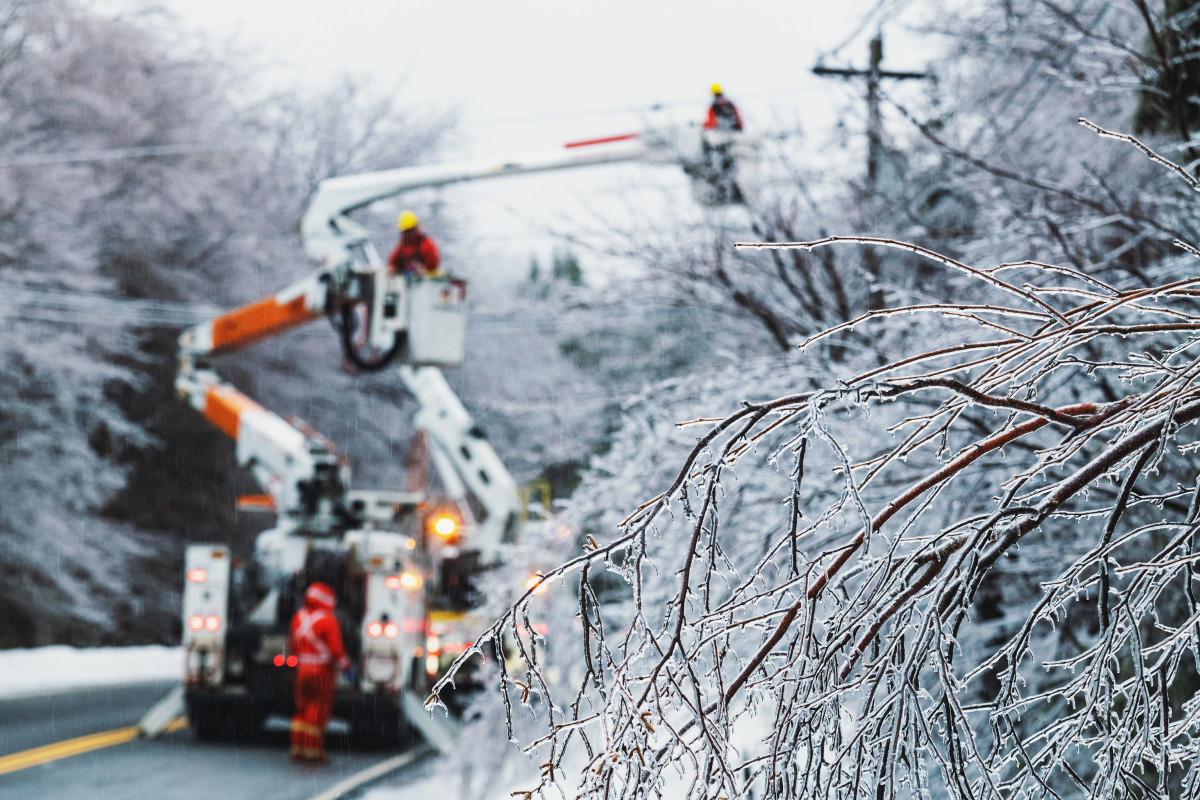
People work to restore power during an intense ice storm as ice-covered trees surround them. (Photo by shaunl on Getty Images)
On January 25, 2026, The Weather Channel updated its coverage of the storm, stating that 220 million people across 34 states are being affected by heavy snow or thick ice. Remarkably, the article noted that those millions represent "almost two-thirds of the nation's estimated population."
Ice accumulation stands out as the most destructive part of the ongoing storm. Weather.com has explained how dire the effects of ice exceeding half an inch can be. “Once ice accumulations exceed one-half inch, the most high-end impacts can occur, including widespread severe tree damage and power outages that may last for days.” That article went on to state that “the most devastating storms contain ice accumulations of an inch or more.”
On January 23, 2026, the award-winning senior meteorologist for the MyRadar app and Washington Post contributor, Matthew Cappucci, predicted on X that up to 1.5 inches of ice accumulation is possible. “I’m in Oxford, Mississippi where we could see 1 to 1.5 inches of ice! That will bring SEVERE impacts! Very concerned about Tupelo and Monroe too.”
Largely due to the destructive power of the ice that is building up across the country, ABC News reported on January 25, 2026, that more than 800,000 customers were without power. The outlet highlighted Tennessee, Mississippi, Louisiana, and Texas as the states that have been the hardest hit.
Up to 24 Inches of Snow and 45 MPH Winds Forecasted, Creating Whiteout Conditions and Travel Nightmares
On January 25, 2026, the New York Post reported that parts of the Northeast and Mid-Atlantic could see snow accumulation of "possibly closer to two feet." Furthermore, the outlet reported that 12 to 18 inches of snow would be widespread in the region.
A January 25, 2026 WV News report detailed the powerful wind conditions that are expected in West Virginia. The outlet cited Appalachian Power's prediction, which called for wind gusts of up to 45 mph that could cause a significant number of power outages in Raleigh, Mercer, and Berkeley counties.
Between thick ice, heavy snow, and powerful winds impacting much of the country, blizzard-like conditions have made travel severely dangerous for many. On January 25, 2026, The Weather Channel's website reported that "at least 24 states have declared emergencies, many roads and highways are impassable and a staggering number of flight cancellations are piling up."
This week, the American Heart Association released its annual Heart Disease and Stroke Statistics for 2026. Deaths from both heart disease and stroke have decreased in recent years, but these conditions still remain the leading cause of death for Americans.
"Nearly half of U.S. adults now fall under the umbrella of cardiovascular disease, and that should be a wake-up call," says cardiologist and cardiac electrophysiologist Andrew Rudin, MD, of Natural Heart Doctor. "It’s what happens when sleep gets short, stress stays high, blood sugar runs off course, and inflammation becomes the norm. Those things shape heart and brain health long before anyone feels ‘sick.’"
In the United States, cardiovascular disease accounts for one death every 34 seconds—more deaths than cancer and chronic respiratory diseases combined. In 2023, cardiovascular disease accounted for 915,973 deaths, which was down from 941,652 in 2022.
Still, survival remains poor. Sudden cardiac arrests contributed to 380,349 deaths in the U.S. alone in 2023.
Optimal cardiovascular, kidney, and metabolic health is also low among Americans. Building awareness and control of hypertension and diabetes are important opportunities for prevention and management.
Brain health is also becoming a common topic of conversation, given the increasing number of adults reporting cognitive disability. And while age-adjusted mortality rates from stroke declined 24 percent from 2004 to 2023, age-adjusted mortality from dementia increased 47 percent over the same period.
Preventing Cardiovascular Disease
Prevention, particularly addressing risk factors early, remains key to reducing the risk of heart disease and stroke. These conditions rarely result from genetics alone or a sudden onset of bad luck. It usually reflects years of silent wear and tear on the blood vessels. That’s why early screenings for blood pressure, cholesterol, and blood sugar, along with lifestyle changes, are so important.
“Blood pressure is still one of the biggest shared risk factors for heart attacks and strokes, but people tend to shrug it off if it’s only ‘a little high,'" Rudin explains. "Over time, even modest elevations damage blood vessels and raise stroke risk. The encouraging part is that everyday changes like movement, better sleep, and reducing processed foods can move the needle more than most people expect."
Implement these daily habits and lifestyle changes to protect long-term health:
Osteoarthritis is the most common form of arthritis, affecting roughly 33 million adults in the U.S. When the protective cartilage that cushions the ends of the bones wears down over time, osteoarthritis develops. Sure, any kind of joint pain is inconvenient. But over time, osteoarthritis can lead to changes in bone, cartilage, and other joint tissues, resulting in disability or making it harder to work, stay active, or handle everyday tasks.
There are several factors that increase someone's risk of developing osteoarthritis, including aging, excess body weight, previous joint injuries, and long-term physical inactivity. Genetics and chronic inflammation can also play a role. If developing the disease is of concern, biochemist Rhonda Patrick, PhD, recently did a deep dive into the role certain vitamins and supplements play in supporting joint health and ultimately, reducing osteoarthritis risk.
Vitamins and Supplements to Reduce Risk of Osteoarthritis
Vitamin K
Vitamin K plays a surprisingly important role in joint health, specifically when it comes to slowing cartilage damage. It helps activate a protein called matrix Gla, which prevents abnormal calcification inside cartilage and joints. Low vitamin K intake has been linked to a higher risk of osteoarthritis and faster disease progression. This often happens when diets are lacking in leafy greens, so make sure to get in your daily serving.
Omega-3 Fatty Acids
Omega-3s can help calm the chronic inflammation, the culrpit behind joint pain and stiffness. A 2023 meta analysis found that omega-3 supplementation led to small but meaningful improvements in both pain and physical function in people with osteoarthritis. Omega-3s may also work best when paired with other joint-supporting supplements, like Glucosamine.
Glucosamine
Glucosamine is a natural compound your body uses to build and maintain cartilage. While research results are mixed, that inconsistency appears to come down to supplement quality. Studies using pharmaceutical-grade glucosamine sulphate show reduced joint-space narrowing over several years, along with improvements in pain and function.
Chondroitin
"There was a 2015 Cochrane review that found chondroitin alone or in combination with glucosamine was better than placebo in improving pain in patients with osteoarthritis in the
short in short term," Patrick shares.
Men’s Journal aims to feature only the best products and services. If you buy something via one of our links, we may earn a commission.
Why We Love This Deal
Winter storms are set to affect over a dozen states, even reaching as far south as Texas, and it's sending shoppers in search of cold-weather gear into a frenzy. If you have to venture out into its path, heavy-duty snow boots are a must, but most retailers won't be able to ship for a number of days. It's for this reason that many are turning to Amazon. One of its top-selling basic boots is under $50 in all sizes right now (while supplies last), and it arrives very fast thanks to Prime shipping.
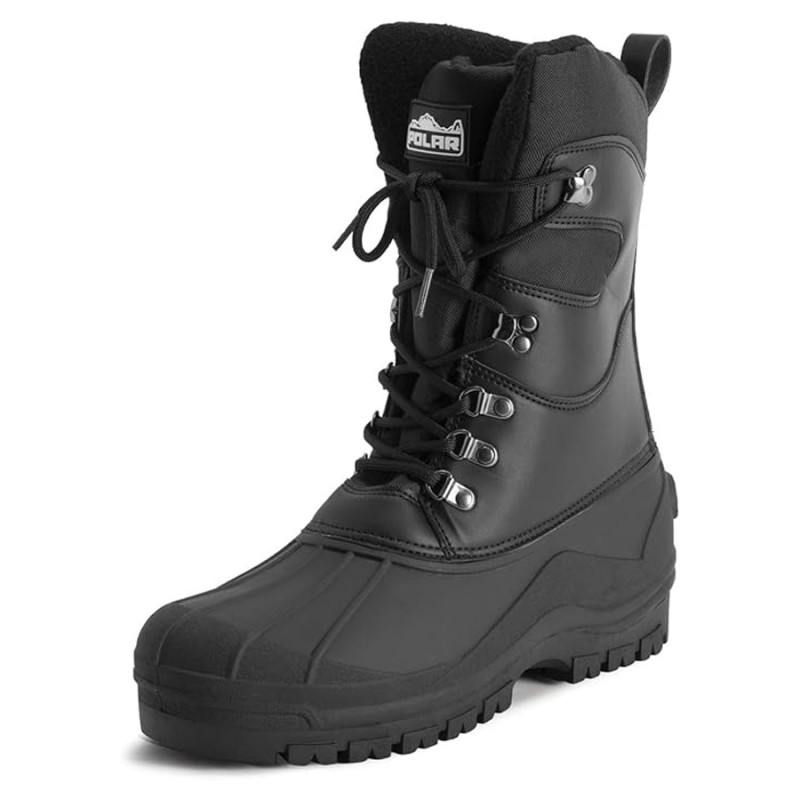
The boot is Polar’s 9.5-Inch Waterproof Snow Boot, and it's just $45 on Amazon right now. This model provides full elemental protection thanks to a tall shaft and waterproof design. You can pick them up in one of five colorways at prices between $45 and $50 in sizes 8 to 14.
Polar 9.5-Inch Waterproof Snow Boots, From $45 on Amazon
Best For: Snow shoveling, walking the dog, outdoor activities
These 9.5-inch, fully faux fur-lined boots perform just as well as brand names do, for about a quarter of the cost. Thanks to their waterproof synthetic upper and single-piece molded rubber soles, you could even wear them in standing water with no issues. They have enough tread for when things get icy, and the faux-fur lining makes them quite comfy and incredibly warm. They come with durable laces and steel eyelets to tighten them all the way up.
I’ve spent quite a good amount of time hunting for this season’s best winter footwear lately, and there is one thing I've noticed: popular models with a reasonable price seem to disappear faster than they can be restocked. Many boots around this price, even those up to $75, are often picked through at this point, especially in common sizes. These $45 Polars are a steal, and deliver similar everyday protection to that of some Sorels (around $220) or The North Face’s models (around $150).
For shoveling the driveway or deck, walking the dog, or just being outside for a few hours, these are definitely a solid choice. They have ample insulation, are comfortable during extended periods, and the tall shaft and waterproof design do at least as much as what the name-brand boots can do. While they’re certainly not expedition boots, they are made for general winter use, and the price is hard to beat.
Numerous shoppers were genuinely surprised by how well these boots performed, even in frigid weather. One delivery driver, who has to wade through snow up to knee-height, said they “hold up well,” while noting they’re “comfortable.” They felt the boots could have been more supportive, but said they still “can walk in them all day.” A simple Dr. Scholl's insert should do the trick, otherwise.
“Stylish snow boots that could double as a wet, cold muck boot,” said another, while a third even said they’re “durable on the outside and super warm and soft on the inside.”
A boot like this one from Polar at $45 is a very good price, which is why we think this may be one of the next to disappear. Don’t wait before it’s too late to grab these, as the weather will likely delay delivery times.
Wingstop isn't the only fast food joint embracing hot honey in the new year. McDonald's, never to be outdone, just announced a pretty sizable array of hot honey offerings that will be available at its stores starting January 27, reports Fox Business.
McDonald's New Hot Honey Offerings
Wingstop's Hot Honey Trio and KFC's Mike's Hot Honey collab have sealed the deal that hot honey and chicken are the fast food world's new Jim and Pam. So naturally, McDonald's is responding by adding hot honey to its chicken offerings. There will be both a Hot Honey McCrispy sandwich and a Bacon Hot Honey McCrispy sandwich. No Hot Honey McChicken, but I guess you get what you pay for.
There's also going to be a Hot Honey Snack wrap, which the chain touts has 17g of protein. Apparently, McDonald's is also hopping on the protein trend, following chains like Dunkin' and Starbucks, which both launched lines of protein drinks.
On the breakfast front, McDonald's is also launching a Hot Honey Sausage Egg Biscuit, which it also touts has 17g of protein. Obviously, there will also be a Hot Honey dipping sauce available for McNuggets, fries, and anything else you may desire — even a DIY Hot Honey McChicken. Still no word on the return of Hot Mustard, though.
What People Think of McDonald's Hot Honey
While it doesn't officially launch for a few more days, some savvy eaters seem to have already gotten a taste of the new sauce. "McDonald's has Hot Honey sauce and it is delicious," one test subject wrote on X, alongside pictures of themself holding the sauce cup and dipping a fry in it. "There's the sweet and spiciness going on."
The Hot Honey McCrispy has actually been available in Canada since May 2025. Food YouTuber Ken Domik tried it at the time and said it lived up to its name. "Man, that's spicy!" he exclaimed after taking a bite. "I think this is too spicy for the average person."
The 2026 Oscar nominations were officially announced on January 22, and all of Hollywood is talking about Sinners' impressive 16 nominations, which sets the record for a single movie. What’s come as even more of a surprise is the fact that Delroy Lindo received a Best Supporting Actor nomination for his role in the film as Delta Slim. The recognition is well-deserved, given his impeccable performance in the Ryan Coogler movie, and it marks his first-ever nomination from the Academy.
As much as I find myself celebrating Lindo’s honor, I can’t help but be reminded that his talent should have been recognized long before this year. He is an incredible actor with an extensive 50-year resume on the big screen. From his performance in Malcolm X to Crooklyn to The Harder They Fall, Lindo has shown he is a quiet force in the movie business. Which brings me to my point. There was one movie role in particular that actually should have earned Lindo his first Oscar nomination back in 2021.
Did Delroy Lindo Deserve an Oscar Nomination for 'Da 5 Bloods'?
In this screengrab, the virtual table for Da 5 Bloods is seen at the 26th Annual Critics Choice Awards on March 07, 2021. (Photo by Getty Images/Getty Images for the Critics Choice Association)
Photo by Getty Images/Getty Images for the Critics Choice Association
Back in 2020, when the world was trying to ease its way back into "normalcy" following the COVID-19 pandemic, Netflix released Da 5 Bloods. The war drama from legendary writer and director Spike Lee follows the story of four Vietnam War veterans who return to the Asian country in search of the remains of their fallen commander and a secret treasure. The trek is anything but easy, as chaos ensues thanks to new enemies and the unwelcoming terrain.
In Da 5 Bloods, Lindo portrays a veteran named Paul, who has a cantankerous relationship with his son (played by Jonathan Majors), a bad case of PTSD, and a secret that he’s been holding onto for decades. The complexities of Paul make him a captivating character to watch develop as the plot unfolds, and Lindo does a great job seeing to it that you are never bored by Paul and always changing your mind on how you feel about him.
Lindo’s work earned him Best Actor nominations from the Black Reel Awards, the Chicago Film Critics Association, the Critics' Choice Movie Awards, the NAACP Image Awards, and the list goes on. Sadly, Lindo received no Academy Award nominations for his portrayal in Da 5 Bloods. And it almost feels criminal.
Who were the Oscar Best Actor Nominees in 2021?
To be clear, I’m not saying that the Best Actor nominees for the 2021 Oscars were undeserving. I’m simply saying Delroy at least earned a spot in the category. In case you were wondering, here were the nominees for Best Actor that year:
With all that being said, judge for yourself and watch Da 5 Bloods on Netflix right now. Additionally, tune into the Academy Awards on Sunday, March 15, to see if Lindo will take home a statue as he’ll compete this year against:
Back in the days of playing sports, partaking in challenges and competitions were a regular part of the routine. At practice, you raced teammates or duked it out in scrimmages. Even if you didn’t play sports, gym class still put your individual fitness to the test with staples like a one-mile run, broad jumps, and the infamous beeper test. There’s a case to be made that this kind of testing shouldn’t stop once we’re adults. Testing different physical capacities, like muscular strength and aerobic capacity, is just as valuable (if not even more so) as we age.
James DiNicolantonio, Pharm.D., a cardiovascular research scientist, recently shared several fitness tests to see whether you land in the top 1 percent. If you’re up for the challenge, allocate the exercises below across different days of the week and see how you fare.
P.S., if you can't successfully pass all the tests on the first go around, don't worry. These benchmarks are something you can build toward over time.
Hang from a bar with an overhand grip, hands just outside shoulder width.
Pull your chest toward the bar until your chin clears it, then lower under control.
25 Pushups
Pushup
Start in a plank with hands under shoulders and body in a straight line.
Lower your chest to the floor, then press back up without letting hips sag.
30 Crunches
Weighted Crunch
Lie on your back with knees bent and feet flat on the floor.
Brace your core and lift your shoulders off the ground, then slowly lower.
7-Minute Mile
Running
Getty Images/Nikada
A 7-minute mile sounds quick, but the faster you run it, the faster it’s over. Build up to this through regular runs and interval training, gradually pushing your pace faster. Stay consistent, and that once-intimidating pace will start to to feel manageable for short distances.
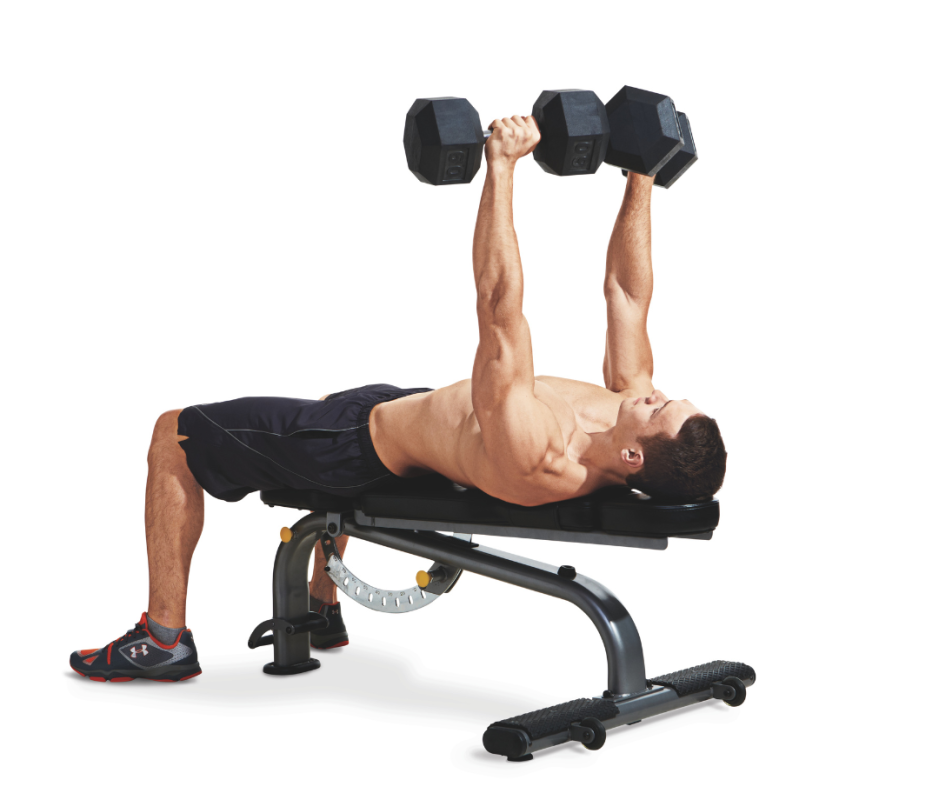
1.25x Body Weight Bench Press
Dumbbell Bench Press
Lie on a bench with feet planted and grip the bar slightly wider than shoulders.
Lower the bar to your chest and press it up until arms are fully locked out.
1.5x Body Weight Squat
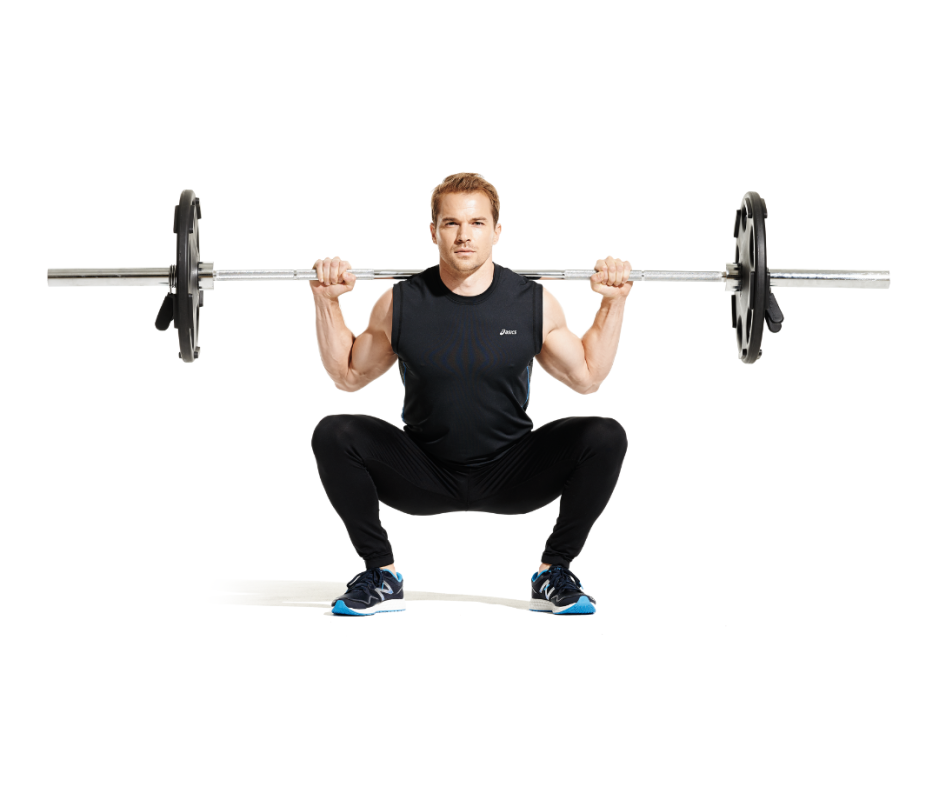
Back Squat
Stand with feet shoulder-width apart and the bar resting across your upper back.
Sit your hips down and back until thighs are at least parallel, then drive up to stand.
2+ Mile Run
Running
Getty Images/muratkoc
If running isn’t your forte, even a single mile can sound daunting. Being able to run two miles or more without stopping is a solid measure of cardiovascular endurance and aerobic fitness. It shows your heart, lungs, and muscles can work together efficiently during a sustained effort.
10-Second Sprints
Sprints
Getty Images/Jacob Wackerhausen
Find enough space to safely run, then sprint all-out for 10 seconds. Repeat this four to five times, taking brief rest periods in between to let your heart rate come down slightly before the next effort.
60-Minute Sport
Basketball
Getty Images/imtmphoto
When was the last time you played a sport? Testing your athletic abilities, like rotating, sprinting, and jumping, is a good way to see how well your body moves and produces power.
Stay on the fitness side of the internet long enough, and you’ll quickly learn that everyone swears by a different training style. Some lifters fall into the camp of high-volume routines with endless sets, while others rely on high-intensity methods. Six-time Mr. Olympia Dorian Yates proved that less could be more, as long as training intensity was high enough.
Yates, the retired bodybuilding legend, recently appeared on the Huberman Lab podcast, where he discussed the training philosophy that defined his career prime: Blood & Guts. The approach is simple and brutal, consisting of short workouts built around maximum effort and minimal volume, with just a handful of working sets taken all the way to muscular failure.
"Somebody came up with a moniker, 'Blood and Guts,' when they saw my training. 'That looks like blood and guts,'" Yates said on the podcast. "So that's what we called it...It was briefer than everyone else I was competing against. And it had an effect."
Early in his career, Yates trained just three times per week for 45 to 60 minutes at a time, and progress came quickly. However, when he experimented with higher frequency and more volume, his gains stalled within weeks. Cutting volume back sparked growth again, teaching him a lesson that would shape the rest of his career.
Yates credits his approach to the work of Arthur Jones, who popularized high-intensity training (HIT), and later Mike Mentzer, who popularized the idea of brief, brutally hard workouts built around sets taken to failure. Blood & Guts was his interpretation of Jones' and Mentzer's philosophies, which he adapted through years of training.
Throughout the '90s, Yates popularized his method by relying on just one or two brutally intense working sets per exercise, using advanced techniques like forced reps, negatives, and rest-pause sets, to stimulate growth.
As with any training, it's not a one-size-fits-all situation. On the podcast, he noted that Jones’ original HIT model, built around full-body workouts performed a few times per week, would be more than sufficient for the average person looking to build and maintain muscle for everyday health. His own Blood & Guts system was designed for competitive bodybuilding and demands a level of intensity that isn’t suitable for beginner lifters.
But for advanced lifters looking to train hard, Yates’ results speak for themselves. After all, his approach produced results that truly revolutionized bodybuilding, and to this day, Yates remains impressed by what he was able to achieve with it.