Whether you keep your tools in a workshop, shed, garage, or even your basement, tool organization is essential for both efficiency and convenience when you're ready to get started on a DIY project. Not only do tool storage solutions make it easier to locate your tools quickly, but if you organize hand tools, power tools, and tool accessories, then they won't take up as much space in your workshop.
Even small workshop organization tricks can effectively change the way you store and access your tools for projects around the home. Learning about power tool storage ideas that keep them up off the ground and tool wall ideas for hanging larger yard tools, can help you take a big step toward total garage tool organization. Throughout this guide we discuss a variety of tool organization ideas for garage storage, basement storage, and more, so take this chance to discover how to better organize your home.
Why Tool Organization Matters More Than You Think
Time Savings, Safety, and Tool Longevity
Tool organization is critical for enhancing safety, efficiency, and tool health within your garage or workshop, as cluttered spaces lead to wasted time, unnecessary tool replacements, and increased risk of injury. Proper storage prevents damage from dust and rust, improves workflow, and reduces the mental burden of searching for equipment.
“Tool organization matters for the same reasons any home organization matters: You want to be able to find what you need quickly so you can actually tackle the task. When your tools are organized, it reduces stress, saves you money (you’re not rebuying what you already own), and keeps projects moving,” says Jenny Dietsch, Certified Professional Organizer® (CPO®), founder, and CEO at Getting it Done Organizing.
The Hidden Cost of Cluttered Tools
You can waste hours searching for tools. This inefficiency disrupts DIY project timelines and lowers overall productivity. Additionally, disorganized tools are easily lost, damaged, or stolen, forcing unnecessary, costly replacements. Clutter also increases the risk of tripping, falling, or experiencing accidents from improperly stored sharp or heavy objects, while improper storage leaves tools exposed to damage from environmental factors like rust, dust, and grease, reducing their longevity and forcing you to spend more on replacement tools.
How to Organize Tools: Start With a Simple Tool Organization Plan
Take Inventory of What You Actually Own
The first thing you should do when organizing your tools is to find out what you actually own. Without knowing what you have, it’s difficult to create a functional space that includes proper storage for every tool and tool accessory. “I always tell people to start with a big clear surface and a true sort. Set up a folding table and pull everything out. Once you can see what you have, you can decide what to purge (duplicates, broken tools) and then design a system around the way you actually work,” notes Dietsch.
Group Tools By Use, Not By Size
There are many convenient ways to sort your tools, but if you rely solely on how easy it is to store them, then you are neglecting the potential difficulty in finding them later on. Dietsch explains that you should “group like-with-like and give each category a defined ‘home’ so you can put it back in the same place every time. Sort tools by category like hammers, screwdrivers, wrenches, drill bits, nails, screws, nuts and bolts, etc.”
Decide What Needs Quick Access vs Storage
Some tools are used more frequently than others, so it only makes sense that your tool organization should reflect these differences. Tools that you use regularly should be kept in areas where they are easy to find and easy to access, while tools that are rarely used, like seasonal tools, ladders, and other less frequently used tools, should be kept in storage spaces that are more out of the way, like overhead storage or wall storage.
Even something as simple as keeping your most commonly used screwdrivers in the top drawer of a tool chest instead of the bottom drawer can save you time and effort when you are in the middle of a project.
Related: I Review Gear for a Living. These Are the Best Multitools for Hunting, Camping, and Beyond
Wall-Based Tool Organization Ideas
Pegboard Systems
One of the most common choices for wall-based tool organization is using a pegboard above a workbench. “Pegboard systems are great. They have hooks, shelves, and cups for screwdrivers, wrenches, scissors, tape measures, and small everyday tools,” Dietsch says.
Choosing between classic and modern pegboard systems for tool organization depends largely on your need for weight capacity, aesthetic preference, and budget. While classic fiberboard/wood offers affordability and familiar, universal compatibility, modern metal or plastic systems provide superior strength, durability, and a cleaner aesthetic.
Slatwall and Track Systems
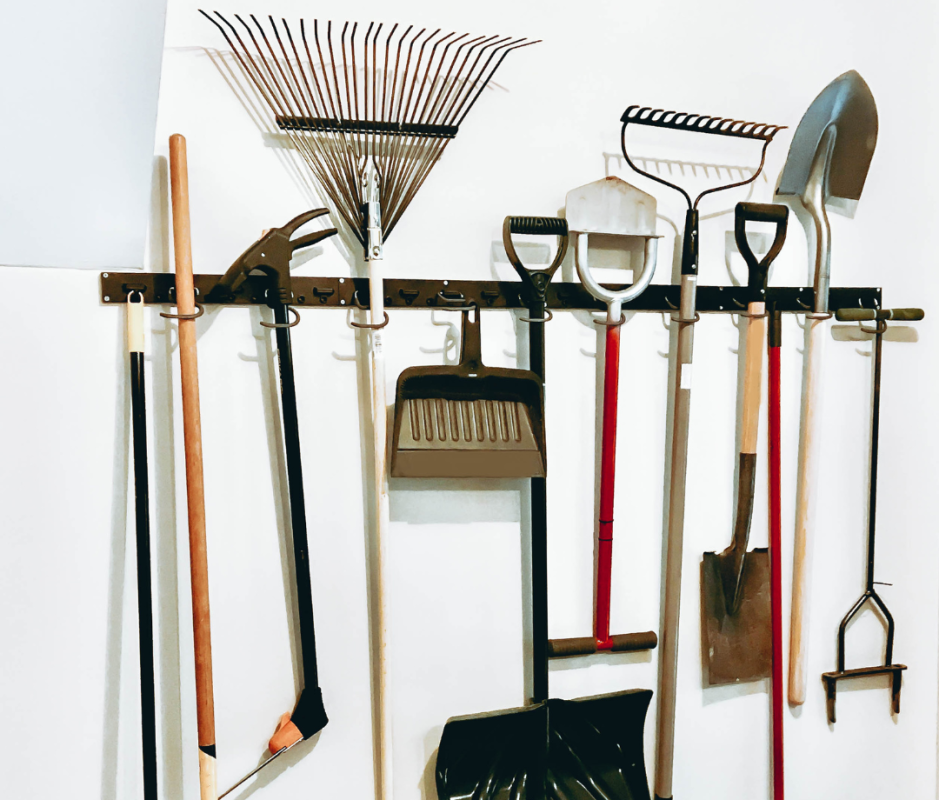
Slatwall and track systems offer superior, flexible, and heavy-duty alternatives to traditional, rigid storage methods. Slatwall consists of vertical panels with horizontal grooves that accept a wide range of accessories, such as hooks, baskets, and shelves, while track systems are horizontal rails attached to wall studs, with hooks and bins that attach to and move along the rail.
Both systems utilize vertical space to free up floor area, allowing for customized, easily adjustable configurations for tools, garden equipment, and sports gear. Dietsch mentions that “track/rail systems are perfect for hanging yard tools, brooms, mops, leaf blowers, and extension cords. The goal is to make your most-used tools instantly visible and grab‑and‑go.”
Magnetic Tool Strips
Magnetic tool strips offer a high-strength, space-saving, and accessible solution for wall-based organization, ideal for holding metal hand tools like pliers, wrenches, and screwdrivers. They take advantage of vertical, underutilized space to clear clutter from benches, providing immediate visibility and easy grab-and-go access to frequently used tools.
Install multiple magnetic strips directly above a workbench to hold commonly used tools, keeping the work surface clear. Alternatively, you could use magnetic strips in combination with slatwall systems for a versatile, customizable, and high-capacity storage wall.
French Cleats for Flexible Layouts
French cleats provide a highly versatile, strong, and adjustable wall-based organization system, utilizing plywood strips with 45-degree beveled edges to interlock tool holders, shelves, and cabinets. They offer superior weight capacity and allow for effortless reconfiguration, making them ideal for custom workshop storage.
The 45-degree angled, interlocking design uses gravity to securely support heavy tools and machinery. Holders can be moved, rearranged, or swapped between walls instantly without needing to drill new holes or patch old ones, and you can build specialized holders (shelves, hooks, bins) for specific tools using scraps.
Getty Images
Tool Storage for Drawers and Cabinets
Foam Drawer Inserts
Tool storage foam inserts, available as custom-cut or pre-cut sheets, protect tools from damage, reduce clutter, and enable quick inventory checks. Custom inserts are tailored to the exact profile of each tool for maximum protection, security, and professional look. They are ideal for high-value tools, preventing them from moving, and creating shadowing to instantly identify missing items. Though, custom inserts have a higher upfront cost and time investment for design, layout, and cutting. They are also less flexible if tool collections change frequently.
Pre-cut inserts are generally lower cost and faster to implement than custom inserts. Many options feature grid-based, tear-resistant foam allowing for easy cutting and peeling to shape, but these inserts are limited to specific, often generic sizes that may not fit odd-shaped tools perfectly.
Adjustable Dividers and Trays
Adjustable dividers and trays for tool storage in drawers and cabinets maximize space efficiency by creating custom-fit compartments that prevent tools from sliding, which reduces damage and speeds up retrieval. “Drawer organizers with multiple small compartments are a must for sorting screws, nails, drill bits, picture‑hanging hardware, and specialty pieces,” says Dietsch. They transform chaotic "dump and run" areas into organized systems, allowing for flexibility as tool collections evolve.
Labeling for Fast Access
While you can rely on your own knowledge to identify items on sight, it’s far easier to simply label the drawers and cabinets where you keep specific tools, especially if you ever work with another person who may not have the same experience as you. Dietsch notes that you should also “add labeled bins inside cabinets for ‘painting,’ ‘electrical,’ ‘plumbing,’ etc., so you’re grabbing a whole category at once instead of rummaging.”
Related: We Painstakingly Reviewed the Best Power Tools of 2025. These Are Our Top Picks
Power Tool Organization Ideas
Wall-Mounted Power Tool Holders
Mounting your power tools on the wall can be a convenient method for keeping them organized and out of the way when you are working. Common options include using steel racks, pegboards, and wall-mounted charging stations, allowing you to maximize garage space by vertically storing drills, saws, and batteries.
Metal or wood racks with slots designed specifically for hanging drills and impact drivers, as well as mounted shelving units designed to hold chargers, batteries, and smaller tools, are highly effective, especially when they have built-in cable management features.
Charging Station Setups
Creating a charging station for your battery-powered tools will help to ensure your batteries are fully charged when you need them, while also organizing your tools and batteries. “Use a bench or shelf near an outlet (or a bench with an integrated power strip) to create one place for chargers and batteries, with cords managed so they’re not a tangled mess,” suggests Dietsch.
You could also construct a dedicated, wall-mounted cabinet with a top shelf for chargers and lower slots to hang drills, or use heavy-duty hooks on a pegboard to hang tools, placing chargers on a nearby sturdy shelf. Similarly, mounting a small kitchen cabinet or locker and installing a power strip inside to hide messy cords can be a great choice for a convenient charging station setup.
Cord and Battery Management
Organize power tools, cords, and batteries with wall-mounted racks, charging stations, and dedicated storage to maximize workshop space and improve efficiency. Dietsch notes that you could “have designated drawers in your tool bench for drills, sanders, nail guns, etc., with cords neatly wrapped.”
Other solutions include under-shelf mounting to store batteries and neatly wrapped cords, wall-mounted racks that can be used to hang tools, allowing cords to hang freely without tangling, or using Velcro cable ties, zip ties, or specialized cord wraps to keep cords neatly bundled when not in use.
Storing Large Tools Safely
Large power tools can be stored safely and efficiently by utilizing heavy-duty vertical storage solutions to maximize space and reduce clutter. Diestch mentions that “for power tools, you want both protection and easy access. Use heavy-duty wall hooks for larger items like leaf blowers or weed eaters so they’re off the floor but easy to grab.”
You can also use deep-drawer cabinets, for large tools like circular saws, or install metal racks on wall studs for extensive large tool storage space. Similarly, overhead storage shelves or ceiling-mounted racks can provide space for ladders and other less frequently used tools.
Related: The Best Smart Home Security Systems People Are Using to Protect Their Homes
Portable and Modular Tool Storage
Toolboxes vs Rolling Tool Chests
Tool boxes are the classic option for convenient tool storage. Depending on the size of the tool box, you may be able to carry it around easily, allowing you to bring a full set of tools directly to the area where you are working, rather than having to go back and forth to the workshop, but these storage devices tend to be smaller and hold less than a rolling tool chest.
Conversely, rolling tool chests or carts provide superior, organized capacity for fixed workshops. They typically have multiple drawers of varying sizes allowing you to store a wide variety of power tools, hand tools, and accessories. Ultimately, the best choice depends on whether portability or high-volume storage is prioritized.
Modular Storage Systems
Modular tool storage systems offer customizable, stackable, and often wheeled solutions for job sites or workshops. These systems feature interlocking boxes, drawers, and organizers designed for durability, easy transport, and efficient organization of tools and small parts. Components can be reconfigured or expanded as tool collections grow, with options including drawer units, small parts organizers with transparent lids, and rolling tool carts.
When Portability Beats Permanent Storage
Portable tool storage is superior to permanent, fixed storage in scenarios requiring high mobility, adaptability to changing workspaces, and immediate, on-site access. While fixed cabinets are ideal for workshops, portability wins when tools must travel between sites, accommodate tight spaces, or improve daily efficiency through organized, mobile systems.
For contractors, technicians, and tradespeople, portable storage (rolling tool chests, modular systems) allows tools to move from a vehicle to the immediate work area, eliminating wasted time walking back and forth to a truck or stationary shed. Similarly, if you work across multiple sites or projects, modular, detachable systems enable you to take only the necessary tools, keeping them organized on the go.
Related: How to Remove Rust From Cast Iron and Re-Season Your Skillets and Pans
Tool Organization Ideas for Small Spaces
Vertical Storage for Tight Garages
It’s very important to assess the space you have when you are coming up with an effective tool organization plan. “In small spaces, you have to go vertical and think in layers. Simple shelves or wall-mounted systems are going to be your best friend. You could also try narrow shelving units or freestanding metal racks with stackable bins,” says Dietsch. Utilizing the vertical space in your garage is essential for efficient tool organization.
Under-Shelf and Ceiling-Mounted Options
To make the most of a small area, it’s recommended to use under-shelf and ceiling-mounted solutions to free up floor space. Install magnetic tool strips on the underside of shelves or cabinets to securely hold screwdrivers, wrenches, and pliers. Attach small plastic bins or trays under existing shelves for hardware, nails, and screws. Utilize pegboards on walls or, if space allows, under large, sturdy shelving units to keep tools in plain sight.
You can also install heavy-duty hooks or purpose-built ceiling racks on ceiling joists to store long-handled gardening tools, ladders, or rarely used items, while DIY drop-down shelves are ideal for overhead storage of your equipment.
Multi-Use Furniture and Fold-Down Benches
When possible, look for garage or workshop furniture with built-in storage. This could be as simple as a rolling stool with a storage drawer underneath the seat or as complex as a full fold-down workbench that can transition from a simple storage shelf when folded up to a workbench when folded down. Another good option is to take advantage of any space underneath a workbench to build storage compartments for your tools and accessories, so you take advantage of every available bit of space.
Related: How to Build a Firewood Shed That Keeps Wood Dry and Ventilated
DIY Tool Organization Projects
Scrap Wood Tool Holders
Making tool organizers from scrap wood, such as plywood strips, 2x4s, or pallet wood, offers customizable, cost-effective storage solutions for workshops and garages. Popular projects include wall-mounted racks with angled slots for hand tools, custom-fit tool holsters, and small benchtop organizers.
- Make notched, angled slots to hold rakes, shovels, and brooms on the wall.
- Construct small, modular boxes or racks for frequently used tools, using walnut or pine scraps for a durable, customized workspace.
- Use plywood scraps to create tailored holders for hammers, screwdrivers, and pliers by drilling specific hole sizes or cutting slots to fit the tools.
PVC Pipe Organizers
PVC pipe can be another great material to make DIY tool organizers for your garage, providing a cheap, customizable, and durable solution for workshop clutter. Key projects include angled pipe holders for drills, PVC grid racks, pegboard attachments for small items, and mounted tubes for long-handled tools.
- Cut PVC pipe (3-inch diameter) at a 45-degree angle, then screw the straight end to a wall-mounted board, creating a pocket where you can slide in drill handles.
- Cut 1.5-inch to 2-inch PVC pipe into sections for storing tools like pliers, hacksaws, and screwdrivers, mounting them directly onto wooden studs or plywood.
- Cut small pieces of PVC and slide them over existing pegboard hooks to create small cubbyholes for pencils, markers, and small tools.
- Thread paracord or rope through a length of 3/4 inch PVC pipe to hold rolls of tape, wire, or cord, then hang the ends on wall hooks.
- Cut 30 cm lengths of pipe, halved at a 45-degree angle, to create strong, individual, or clustered holders for long-handled gardening tools.
Repurposed Household Items
Repurposing common household items can be highly effective for DIY tool organization and to help save money as well as reduce clutter. Some ideas using repurposed household items include old jars for hardware storage, tin cans used as caddies for paintbrushes or hand tools, and old crates and shoe racks turned into efficient wall storage.
- Screw jar lids into the underside of wooden shelves to store nails, screws, and small parts.
- Clean empty tin cans (soup, vegetable) and mount them to a board or use them in a drawer to hold markers, pencils, or small hand tools.
- Use a pallet to create a wall-mounted rack for gardening tools or long-handled tools like rakes and brooms.
- Attach small plastic storage bins or pockets inside cabinet doors to hold small tools.
Budget-Friendly Builds That Actually Last
Your budget may be the thing holding you back from tackling a tool organization project, but with these budget-friendly options, you can save while organizing your tools. A few budget-friendly builds include French cleat walls, PVC pipe holders for power tools, plywood drawer dividers, and mobile cart systems that maximize space.
- French cleats can be made into a highly customizable wall storage system made from plywood. The 45-degree bevel on the cleats allows for secure, adjustable hanging of tools, making it easy to rearrange as your collection grows.
- Cut 3-inch or 4-inch PVC pipes to hold cordless drills, grinders, or flashlights, creating sturdy and cheap custom PVC pipe tool holders.
- Using thin strips of plywood, build custom-fitted drawer dividers for tools, utilizing a "friction fit" so no glue or screws are needed.
- Construct custom, sturdy plywood carts with casters to easily move tools around, providing durable, long-term storage.
- Install inexpensive wire shelves or pegboards to maximize vertical storage in small workshops or garages.
Related: We Tested Dozens of Home Workshop Tools. These Top Picks Are Worth Your Money
Common Mistakes with Tool Organization
Overcrowding Storage Systems
A typical issue is a garage or workshop that looks clean and tidy until a single drawer is opened, revealing that a whole host of tools have been crammed inside. This doesn’t improve organization at all and may lead to damage, as tools bang against each other.
Additionally, Dietsch notes that “people mix everything together. Sharp tools and chemicals stored right next to kids’ sports gear, or every tool and random piece of hardware tossed into one giant bin or bag. That makes it hard to find anything and almost guarantees you’ll rebuy what you already own.”
Organizing By Appearance Instead of Function
Organizing tools by appearance, such as color-coding, matching sizes, or arranging for a "social media-perfect" look, rather than by function is a common, yet inefficient, approach that often sacrifices usability for aesthetics. This method leads to a disorganized, frustrating workspace where tools are hard to find and even harder to put away.
The garage or workshop may look great at first glance, but when you actually need to find a certain screwdriver or a specific wrench, you end up spending way more time than necessary searching your supposedly organized space.
Ignoring Future Tool Additions
Ignoring future tool additions when organizing is a common mistake that leads to overcrowded, inefficient, and chaotic workspaces. To avoid this, design storage systems with at least 20 to 30 percent extra capacity, use modular, expandable shelving or pegboards, and avoid rigid, fixed layouts that prevent future reorganization as new tools are acquired.
For those of you that have a completionist mindset that can’t ignore an empty space on a pegboard or on your shelves, consider using an enclosed cupboard-style storage solution so that you can just close the doors to get that peace of mind you desire without overfilling the space.
Related: I Built a High-End Work Desk for Less Than $200. Here's the Secret
Tool Organization FAQs
What’s The Best Way to Organize Hand Tools?
There are many ways you can organize your hand tools, but one of the best ways is to categorize them by type, such as wrenches, pliers, and screwdrivers, then store them in a dedicated tool storage space, like a rolling tool chest that utilizes drawer liners and labels for clear, easy identification.
Is Pegboard Still Worth Using?
Pegboard is still an excellent option for tool organization due to how affordable it is and the versatility it provides in organizing your tools. Pegboard maximizes wall space, keeping surfaces clear, and is ideal for quick access to frequently used hand tools, though it may not be ideal for heavy power tools when compared to metal alternatives.
How Do Professionals Organize Tools?
Professionals have a variety of ways to organize their tools, but they tend to prioritize accessibility, visibility, and standardization so that everything they need and everything they add has a place, allowing them to maximize their efficiency. Rolling cabinets or tool boxes are a common option, as well as specialized tool bags for convenience and portability.
What’s The Cheapest Way to Organize a Garage?
Generally, the cheapest way to organize the tools in your garage is with a combination of a pegboard system, stackable plastic bins, wall and ceiling hooks, as well as repurposed storage items, like old jars for nails and screws, wooden crates for larger tools, and plastic containers to store moisture-sensitive tools.
from Men's Journal https://ift.tt/2SMXRaJ